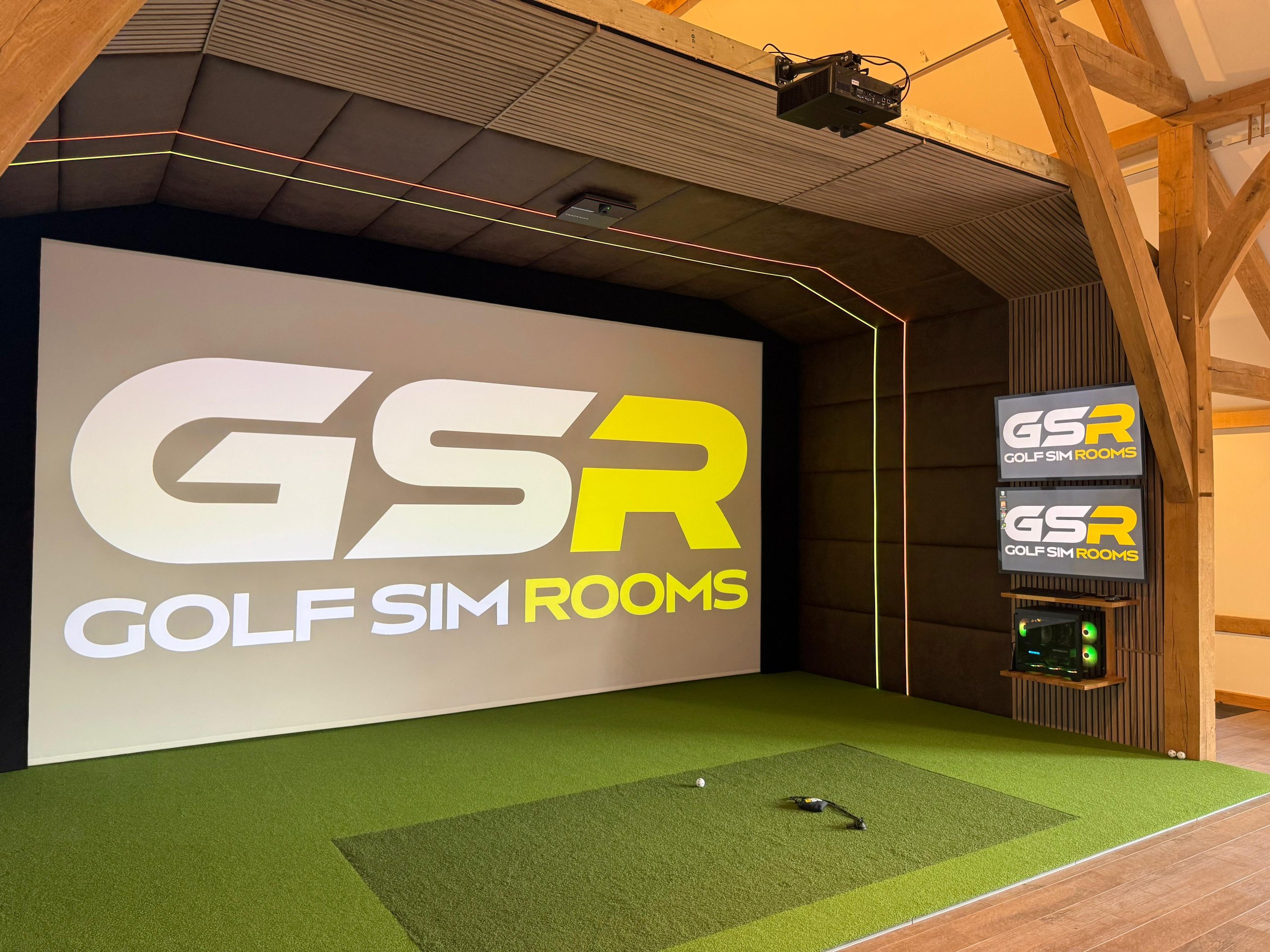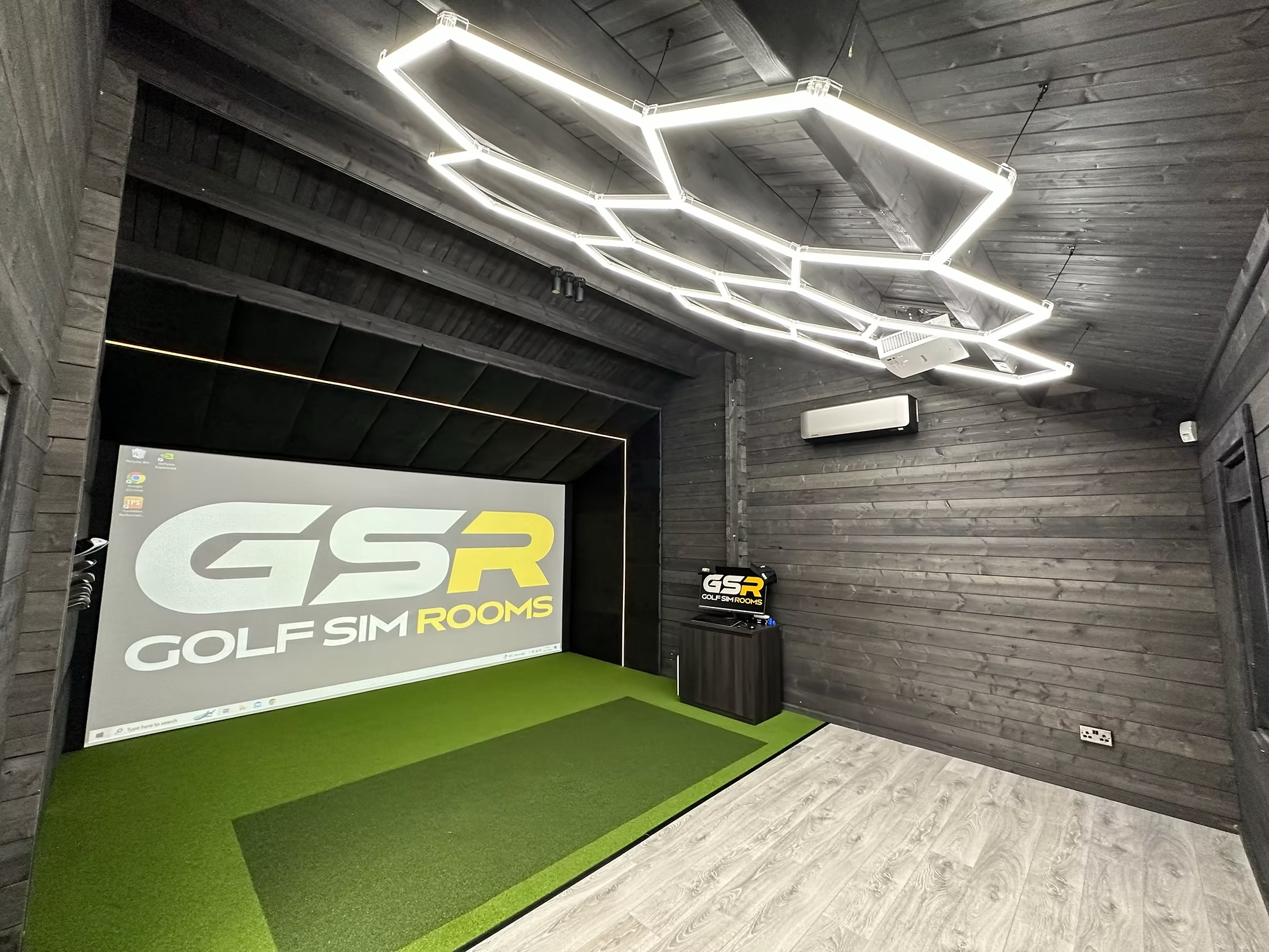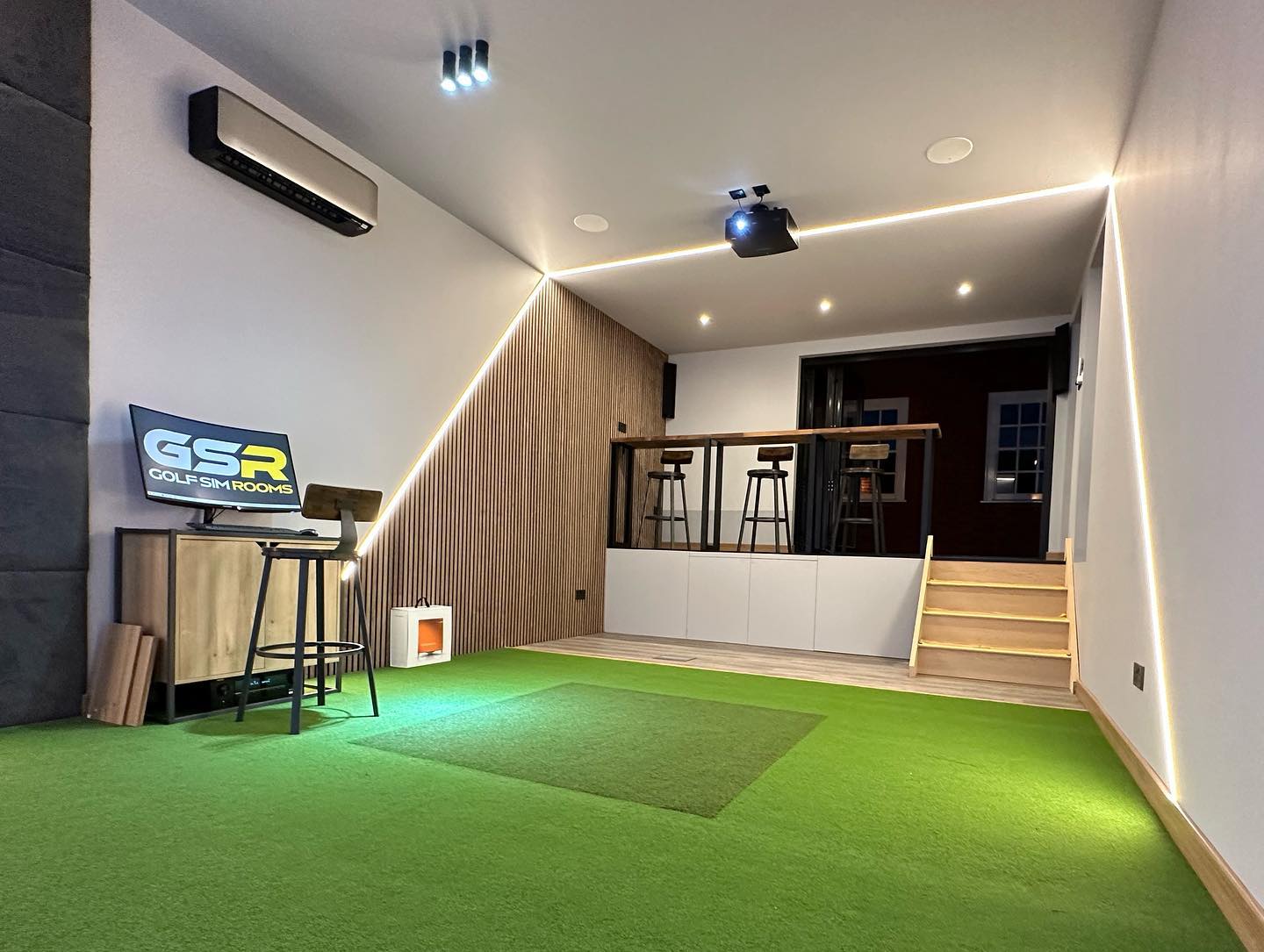


A garage or internal fit out takes one to two days on site once the design and any preparation are complete. A purpose-built log cabin or garden room takes two to four weeks from groundwork to a finished, playable room. Those are the headline figures, and they hold true for most of the projects we complete.
The install itself is only part of the timeline though. The full journey from first enquiry to your first round runs longer, because design, surveying, and any preparatory work all happen before the install team arrives. This covers each stage honestly, so you know what to expect rather than being surprised by it.
The Full Timeline, Start to Finish
Most people asking about install time really want to know the whole picture: how long from making the decision to actually playing. Here is how that breaks down.
The enquiry and consultation stage takes a few days to a couple of weeks, depending on scheduling. This covers the first conversation, the site survey, and the detailed quote.
The design and planning stage takes one to three weeks. This is where the room is designed properly around your space, equipment is specified, and any planning checks are made. Rushing this stage is where installs go wrong, so we do not.
The lead time for equipment and materials varies. Standard launch monitors and screens are usually in stock. A bespoke build with a specific structure or custom finish takes longer to prepare.
The install itself is the shortest stage: one to two days for a fit out, two to four weeks for a full build.
We’ve found that the projects that run smoothest are the ones where the design stage was given proper time. From working with clients, the ones who tried to compress the planning almost always hit avoidable delays later.
Garage and Internal Fit Outs: One to Two Days
A fit out into an existing space is the quickest route to a finished room, assuming the space is ready.
A straightforward fit out where the room is already prepared can be completed in a single day. That covers mounting the screen and frame, laying the hitting mat, mounting and calibrating the projector, installing the launch monitor, running and managing the cabling, and setting up the software.
A more involved fit out runs to two days. This applies where there is ceiling-mounted projector work, more extensive cable management, lighting installation, or acoustic treatment to fit.
The variable that most often extends a fit out is preparation work that the space needs first. A garage that needs damp treatment, floor levelling, insulation, or rewiring adds time before the simulator install can begin. We identify this at the survey stage so it is planned in rather than discovered on the day. If you are weighing a garage against a purpose-built option, log cabins vs garage golf simulators compares the two directly.
Log Cabins and Garden Rooms: Two to Four Weeks
A purpose-built structure is a different kind of project, because you are building the room before you fit it out.
The groundwork comes first. The base needs to be prepared and laid, and this stage depends on ground conditions and access. A flat, accessible plot is quicker than one needing significant preparation.
The structure goes up next. For a log cabin, this typically runs over several days. Our Sheffield log cabin had its first fix completed over three days in week one.
The fit out follows once the structure is weathertight, insulated, and wired. On the Sheffield project, the team returned the following week and completed the fit out over another three days. Two weeks, groundwork to playable room. The full account is on the Sheffield case study.
Higher-specification garden rooms and bespoke builds run toward the four week end, and sometimes beyond, where the finish is more involved. The Essex project, which combined a gym, kitchen, golf simulator, and toilet, took longer because of that scope and the coordination of multiple trades.
In our experience, a slightly longer build done properly works better than a rushed one, because the groundwork and insulation done right at the start are what determine whether the room performs through a winter. Clients who push to compress a cabin build tend to be the ones needing remedial work later.
What Can Extend the Timeline
A few things reliably add time, and being aware of them upfront helps you plan.
Preparation work is the most common. A space that needs damp proofing, levelling, insulation, or electrical work adds days before the install starts.
Planning checks can add time on garden builds. Most fall under permitted development, but conservation areas, listed properties, and certain estates need confirmation first. That is worth checking early rather than late, and golf simulator garden rooms and planning covers the rules.
Access affects build projects, particularly in cities and on rural properties with restricted vehicle access. We plan around this at the survey stage.
Weather affects groundwork and external build stages on log cabins and garden rooms. A wet spell can push a base or a structure back by a few days.
Custom finishes and bespoke elements naturally take longer to prepare and fit than standard specifications.
For the questions that surface these issues before you commit, what to ask before you book a golf simulator installation covers them.
Why the Install Day Itself Goes Quickly
The install being short is a sign the design was done properly, not a sign of corners cut.
By the time the team arrives for a fit out, the room is measured, the equipment is specified to the exact space, and the layout is planned to the millimetre. The install is executing a plan, not solving problems on the day.
That is why attention to detail on install day matters. On our Stockton-on-Tees project, the team arrived at 7:59am, noticed during the fit out that the drawing was eight inches out, corrected it themselves, and carried on. A well-planned install absorbs small issues like that without extending the timeline.
To see everything that gets done during an install, what comes with a golf simulator installation sets it out in full.
Getting Playing the Same Day
One thing worth knowing: for a fit out, you are usually playing the day the install finishes.
We test every system end to end before we leave. That means a ball is hit, the launch monitor captures the data, the software displays the shot on the correct course, and you are walked through how to use the room. Clients regularly play their first round the same evening the team finishes.
For a full build, the room is playable from the day the fit out completes, which is toward the end of the two to four week window.
Conclusion
How long a golf simulator install takes depends on the type of room. A garage or internal fit out is one to two days on site. A log cabin or garden room is two to four weeks from groundwork to finished room. The full journey from enquiry to first round runs a little longer, because proper design and any preparation come first.
The design stage is where a good timeline is set. Rushing it is what causes delays later. Golf Simulator Rooms handles the full process across the UK, from garage fit outs to log cabin and garden room builds. If you want a realistic timeline for your specific project, get in touch and we will give you an honest schedule after a proper survey.