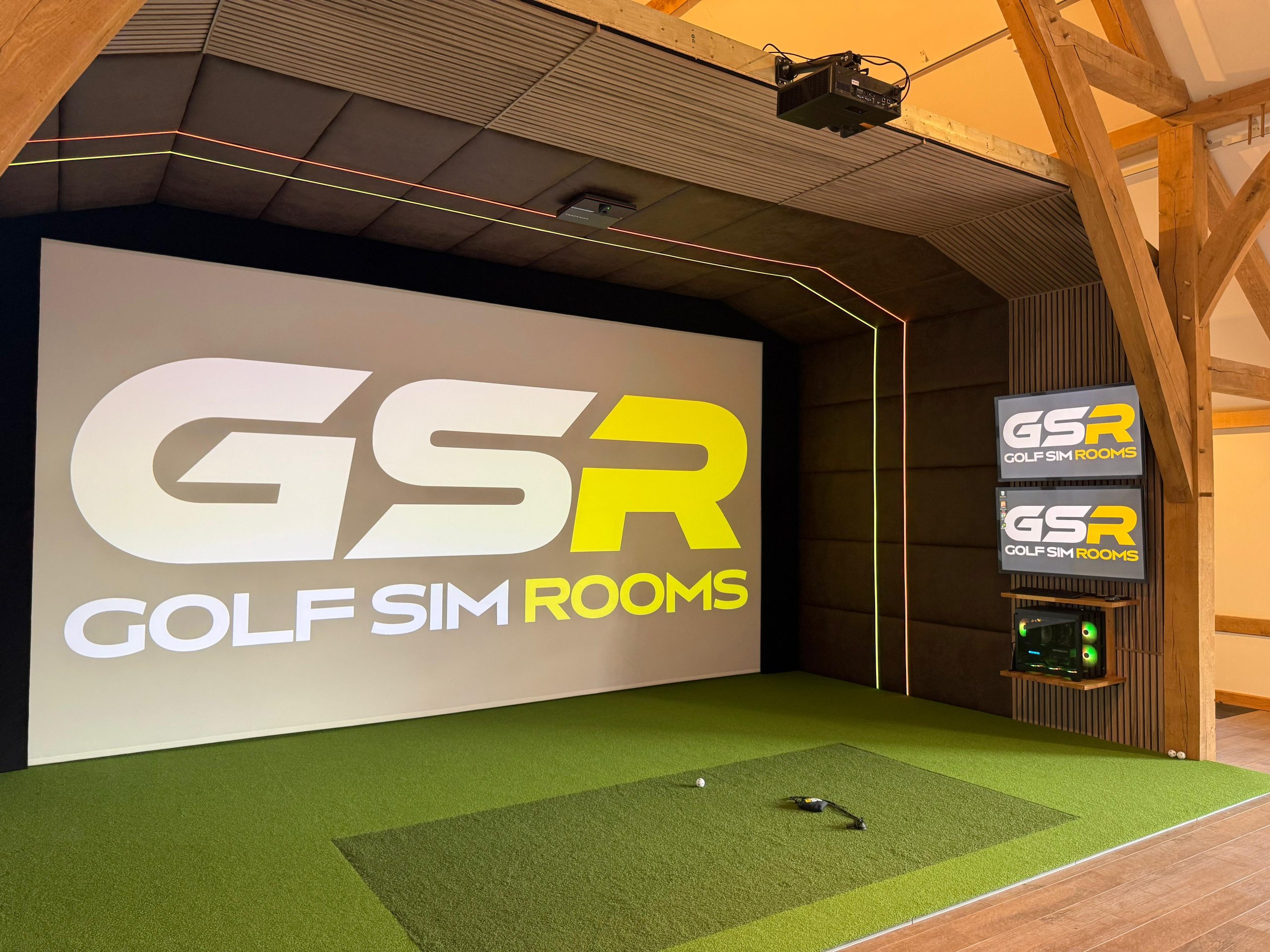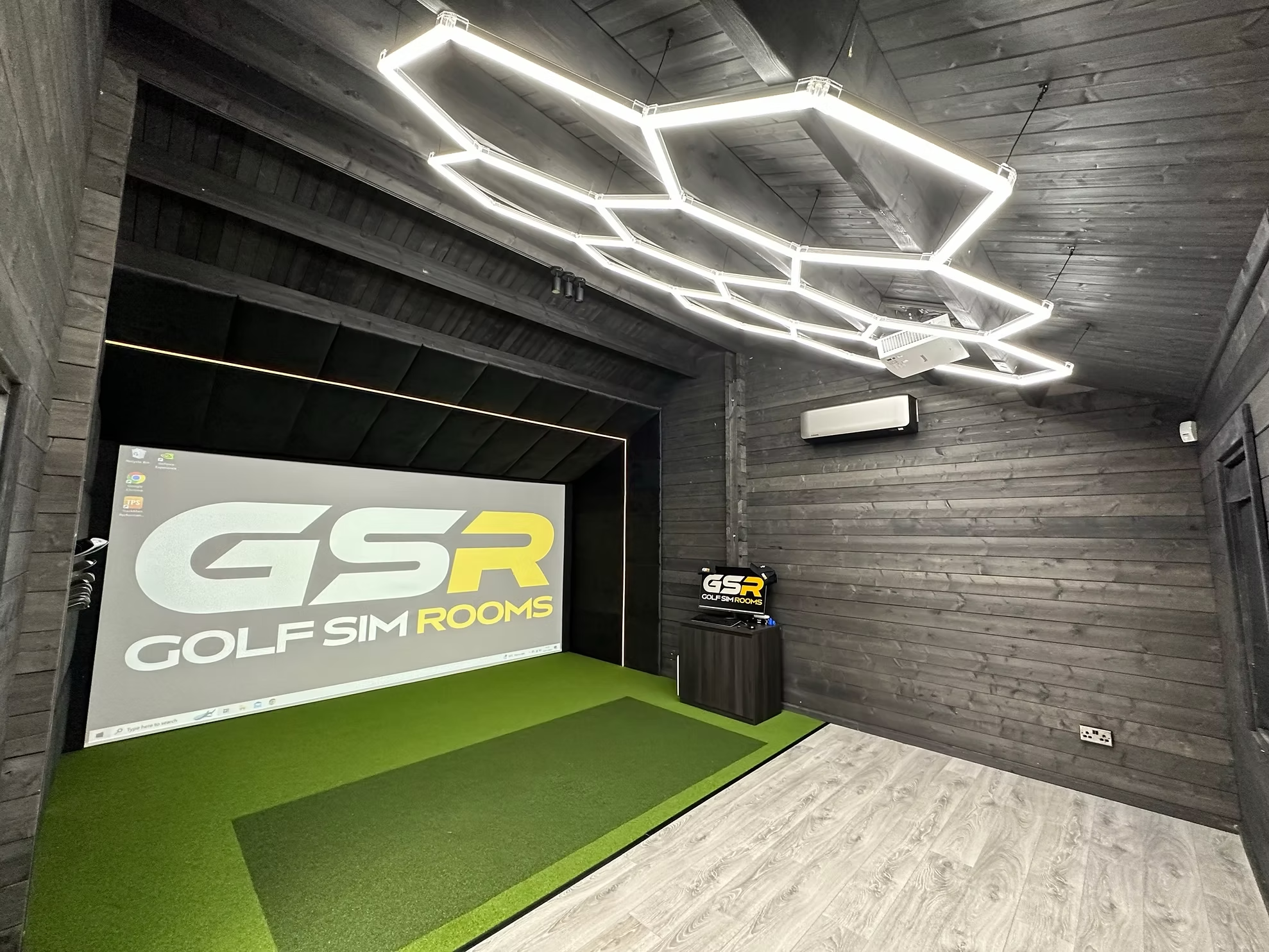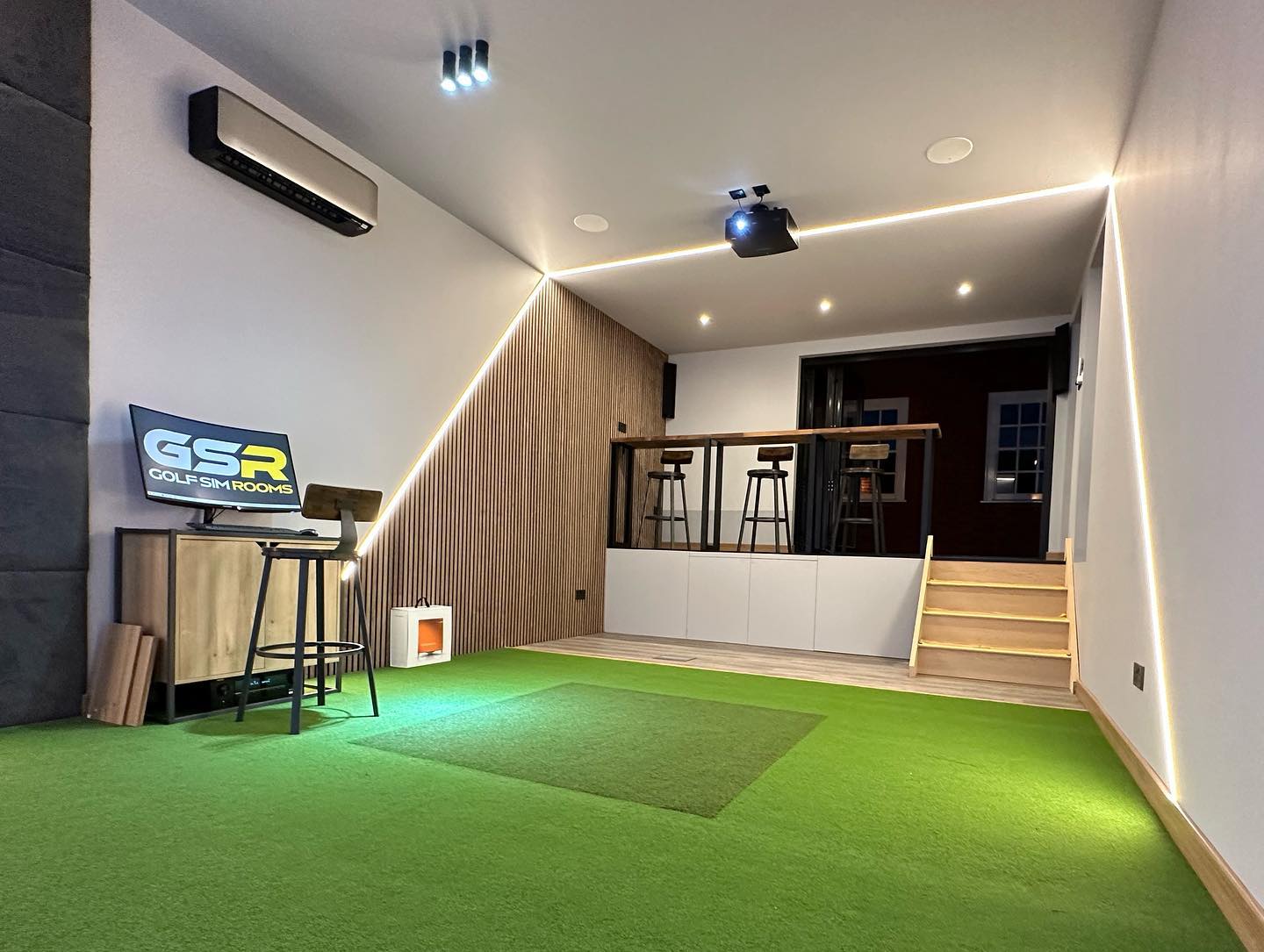


A home golf simulator lowers your handicap by giving you three things a driving range cannot: accurate data on every shot, the ability to practise the same thing repeatedly, and year-round access with no travel. Used with intention, that combination produces measurable improvement in a way occasional range sessions do not.
The important word there is intention. A simulator does not lower your handicap on its own. Playing Pebble Beach for the fourth time is enjoyable, but it is not practice. What actually moves the needle is how you use the room, and that is what this covers.
Why Data Changes How You Practise
The single biggest advantage a simulator has over a driving range is immediate, accurate feedback on every shot.
On a range, you hit a ball and watch roughly where it goes. You might notice a few drifted left. A simulator tells you exactly why. Ball speed, launch angle, spin rate, carry distance, club path, face angle, and smash factor, after every single shot.
That changes everything about how you improve. Instead of hitting 50 balls and guessing, you can see that your face is two degrees open at impact, work on closing it, and watch the numbers confirm whether the change is landing. You are no longer practising blind.
We’ve found that this is the part that surprises golfers most once they start using a room regularly. The data does not flatter you. It shows you precisely what is happening, which is uncomfortable at first and then genuinely useful.
The Power of Repetition Without Friction
Improvement in golf comes from repeating the right movement until it holds up under pressure. The problem with range practice is friction. You have to drive there, wait for a bay, hit a bucket, and drive home. That is two hours, and it does not happen as often as you intend.
A home simulator removes the friction entirely. A twenty minute session before work becomes viable. A quick half hour after the children are in bed becomes normal. The sessions are shorter, but they happen far more often.
In our experience, frequent short sessions work better than occasional long ones for lowering a handicap, because motor learning depends on repetition over time rather than cramming. Fifteen minutes four times a week beats two hours once a fortnight, and a home room is what makes that frequency realistic.
Year-Round Access Is Where Handicaps Are Won and Lost
In the UK, outdoor practice fights the weather for a large part of the year. Short winter days, rain, frost, and waterlogged courses close off practice for months at a time.
That off-season is where handicaps quietly slip. A golfer who does not touch a club from October to March arrives at spring rusty, spends weeks rebuilding form, and has lost ground before the season even starts.
A home simulator turns those lost months into productive ones. From working with clients, we’ve seen that the ones who practise consistently through winter start the following season sharper than they finished the last. That continuity, year after year, is what produces a steady downward trend in handicap rather than a saw-tooth of gains and losses.
How to Actually Use the Room to Improve
This is where most golfers leave improvement on the table. Having the room is not enough. Here is what separates the players who drop shots from the ones who do not.
Practise with a specific focus. Go into each session with one thing you are working on, not a vague plan to hit balls. One club, one fault, one change.
Use the data to check yourself. Do not just feel whether a change is working. Look at whether the numbers confirm it. The feedback loop is the whole point.
Work on your weaknesses, not your strengths. It is tempting to hit drivers because it is satisfying. The shots costing you strokes are usually elsewhere: wedges, mid-irons, the shots inside 100 yards.
Play course rounds too, but know what they are for. Course play on a simulator builds strategy and shot selection. It is valuable, but it is not the same as focused practice. Balance the two.
For more on the practice side, how indoor golf simulators improve your game goes deeper into the training approach.
The Short Game Most People Ignore
Most simulator practice focuses on full swings, because they are satisfying to hit. But the majority of strokes for most amateurs are lost inside 100 yards.
A well-designed simulator setup handles wedge play and approach shots, letting you dial in distances precisely. Knowing exactly how far your 52 degree wedge carries at three quarter effort is the kind of knowledge that saves shots on the course.
Some setups add a dedicated short-game or putting area alongside the main simulator, which turns the room into a complete practice environment rather than just a driving range. For clients focused on scoring, that addition tends to produce more handicap improvement than any amount of driver practice.
Why It Compounds Over Time
The reason a home simulator works where occasional practice does not is compounding.
Small, frequent, focused sessions add up. A change worked on in January holds through February. A weakness addressed in autumn does not reappear over winter. Instead of relearning the same things each spring, you build on the previous year.
That is the mechanism. Not a dramatic overnight drop, but a steady, consistent trend downward, driven by practice that actually happens because the room removes every excuse not to do it.
What a Simulator Will Not Do
Being honest about the limits matters.
A simulator will not fix a swing you do not work on. The room provides the data and the access. You provide the effort. Buying it and using it as a party feature will not lower your handicap.
It also will not replace playing real golf entirely. Course management, nerves, wind, lies, and pressure are part of the game that a simulator can only partly replicate. The best results come from combining simulator practice with real rounds, not swapping one for the other.
For a broader look at whether the investment stacks up, is a home golf simulator worth it covers who gets real value from a room.
Conclusion
A home golf simulator lowers your handicap through data, repetition, and year-round access, but only when you use it with intention. The players who improve are the ones who practise specific weaknesses, check their progress against the numbers, and show up consistently because the room makes it easy to.
The room removes the obstacles. The work is still yours to do, but a home setup makes that work far more effective than any range session. Golf Simulator Rooms builds practice environments engineered for exactly this across the UK. If you want a room designed around real improvement, get in touch and we will start with a proper look at your space.