

There is no single type of golf simulator. The term covers a wide range of setups, from a basic screen and mat in a garage to a fully engineered room with professional-grade launch monitor technology, acoustic treatment, and a bespoke build. Understanding the differences is what allows you to match the right setup to your space, your game, and your budget.
This guide breaks down the main types of golf simulators clearly, covering both the technology inside the room and the room types themselves. By the end, you should have a clear picture of which direction makes sense for your situation.
The Two Ways to Think About Types of Golf Simulators
When people ask about types of golf simulators, they usually mean one of two things. The first is the technology that captures the shot data the launch monitor. The second is the physical environment the simulator lives in the room type. Both matter, and they are separate decisions.
We’ve found that clients who understand both dimensions make significantly better purchasing decisions than those who focus on one and ignore the other. A professional-grade launch monitor in a poorly planned room will underperform. A well-designed room with the wrong technology for the space will frustrate from day one.
Types of Golf Simulator by Launch Monitor Technology
The launch monitor is the core technology in any golf simulator. It captures what the ball and club are doing at the moment of impact and feeds that data into the simulator software. There are two main types.
Camera-Based Launch Monitors
Camera-based systems use high-speed cameras to capture the ball and club at impact. They measure ball speed, launch angle, spin rate, carry distance, clubhead path, face angle, and more depending on the system. The cameras typically sit behind or above the ball at the hitting position.
Well-known camera-based systems include SkyTrak+, Uneekon QED, and Uneekon Eye XO. These are the systems we install most regularly in residential setups across the UK.
In our experience, camera-based systems work better than radar-based systems in smaller rooms because they do not require lateral space for accurate ball tracking. In a compact garage setup where width is limited, that distinction makes a practical difference to how the system is positioned and how accurately it performs.
Camera-based systems are generally well suited to the range of room dimensions we see most often in UK homes. They are reliable, they produce accurate data at a strong price point, and they work across a wide range of simulator software platforms.
Radar-Based Launch Monitors
Radar-based systems use Doppler radar to track the ball and club. They typically sit to the side of the hitting position rather than behind it, and they require a clear line of sight across the ball flight path. Foresight Sports GC3 and GCQuad are two of the most widely used radar-based systems in residential and commercial settings.
Radar-based systems tend to produce exceptional data accuracy, particularly for club data. The GCQuad in particular captures detailed clubhead metrics that some camera-based systems at lower price points cannot match.
The trade-off is that radar-based systems need more lateral space for accurate measurement. In a narrower room, placing the unit correctly can be a challenge. For larger rooms with generous width, that constraint disappears and the performance of a high-end radar system is very difficult to beat.
From working with clients across a range of budgets and room sizes, we recommend radar-based systems most often for clients with larger rooms and higher budgets who want the most comprehensive data available for coaching or serious performance tracking.
Types of Golf Simulator by Room Type
The room type determines how the simulator is housed, what the experience feels like day to day, and what is practically possible in terms of dimensions and finish.
Garage Fit Outs
A garage fit out converts an existing garage into a dedicated golf simulator room. It is the most common starting point for UK homeowners because the shell of the space already exists and the cost goes into the fit out rather than a new structure.
A double garage with a ceiling height above 2.7 metres is a strong candidate. The width of a standard double garage suits most simulator setups, and the depth is generally workable. Ceiling height is the variable that most often limits what is possible in a garage conversion.
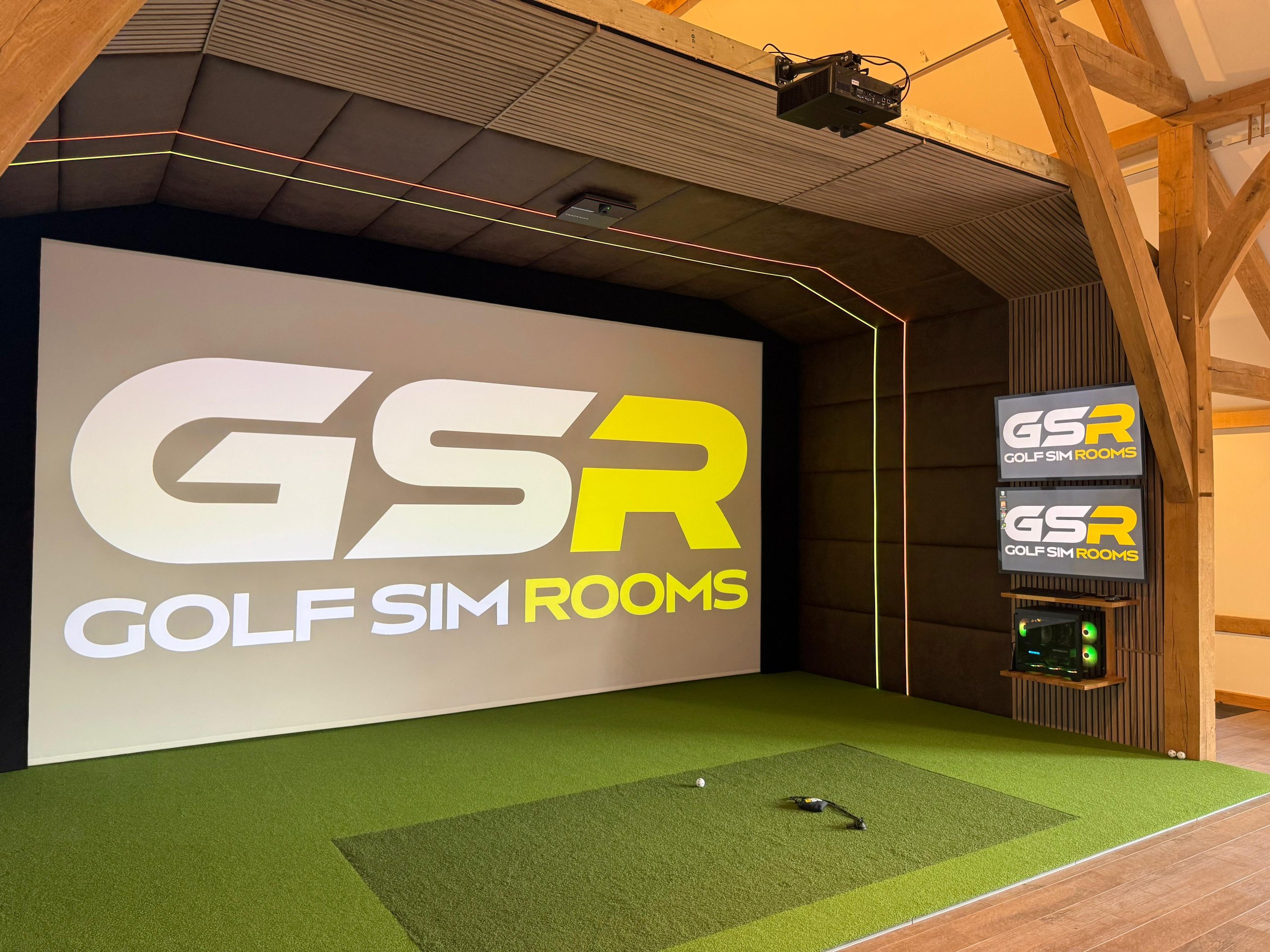
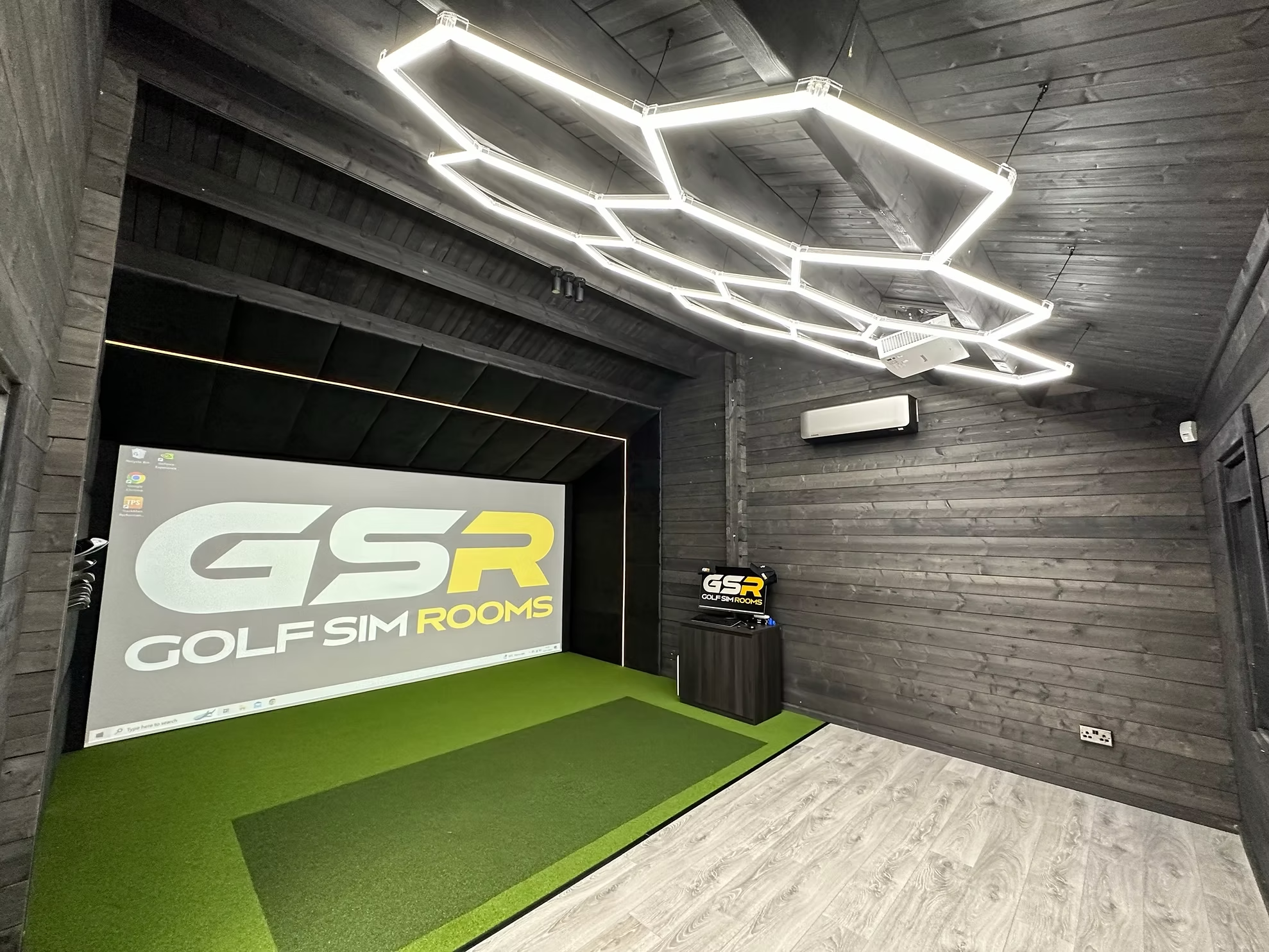
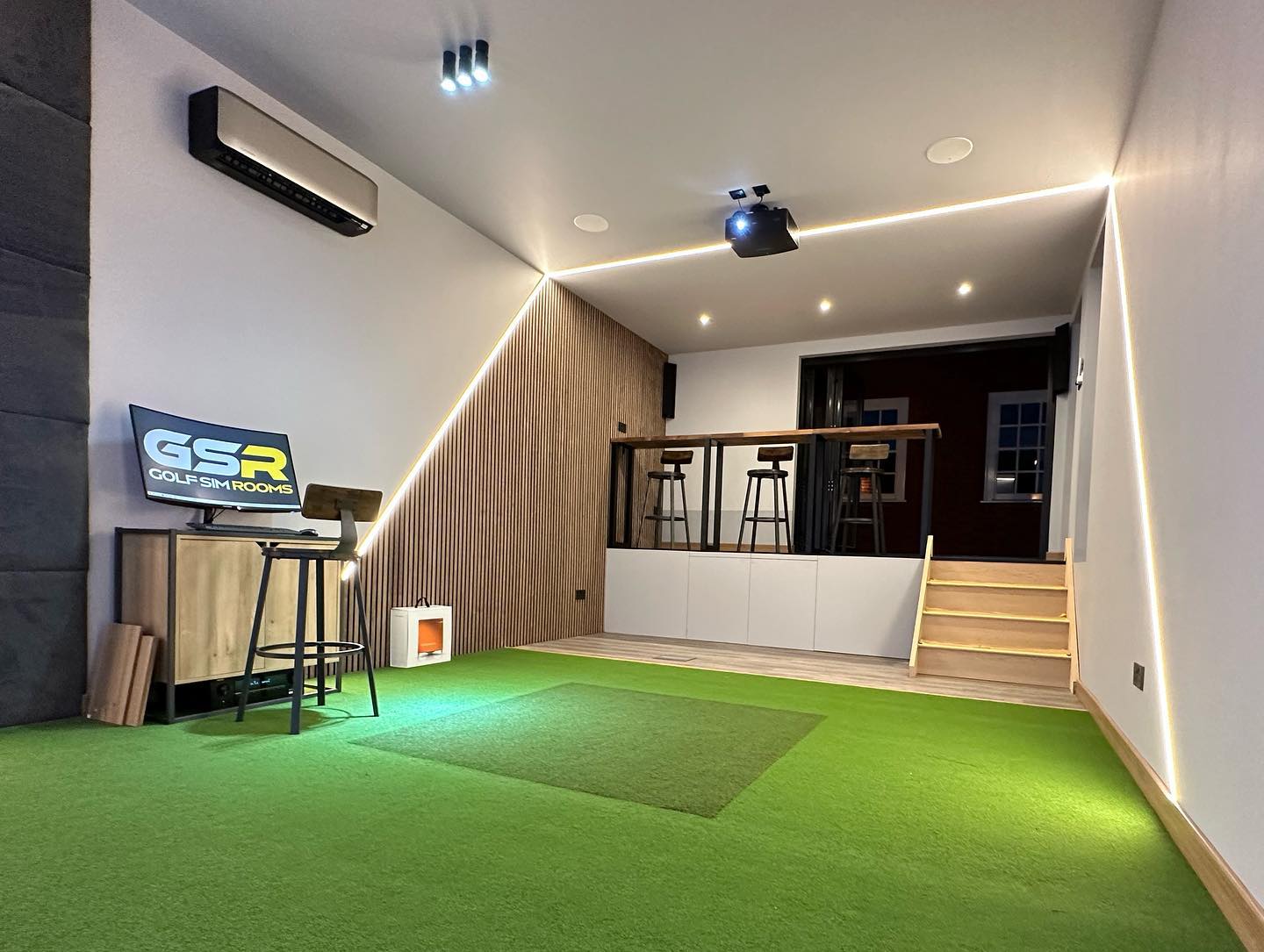
GSR offers garage conversions as a core service. The fit out includes screen and frame, hitting mat, projector mounting, full cabling, lighting, and software setup. Our Foundation, Performance, and Signature build routes allow clients to choose the level of finish that suits their budget, from a clean practical fit out to a fully specified premium room.
One of our clients, Jay Salter, described the garage conversion process as the team “tireless building with real care and attention, including flexing to our stylist demands and bringing practical solutions as things came out.” That reflects the approach on every garage project we complete.
For more on garage conversions compared to other room types, our guide on log cabins vs garage golf simulators covers the decision clearly.
Log Cabin Golf Simulators
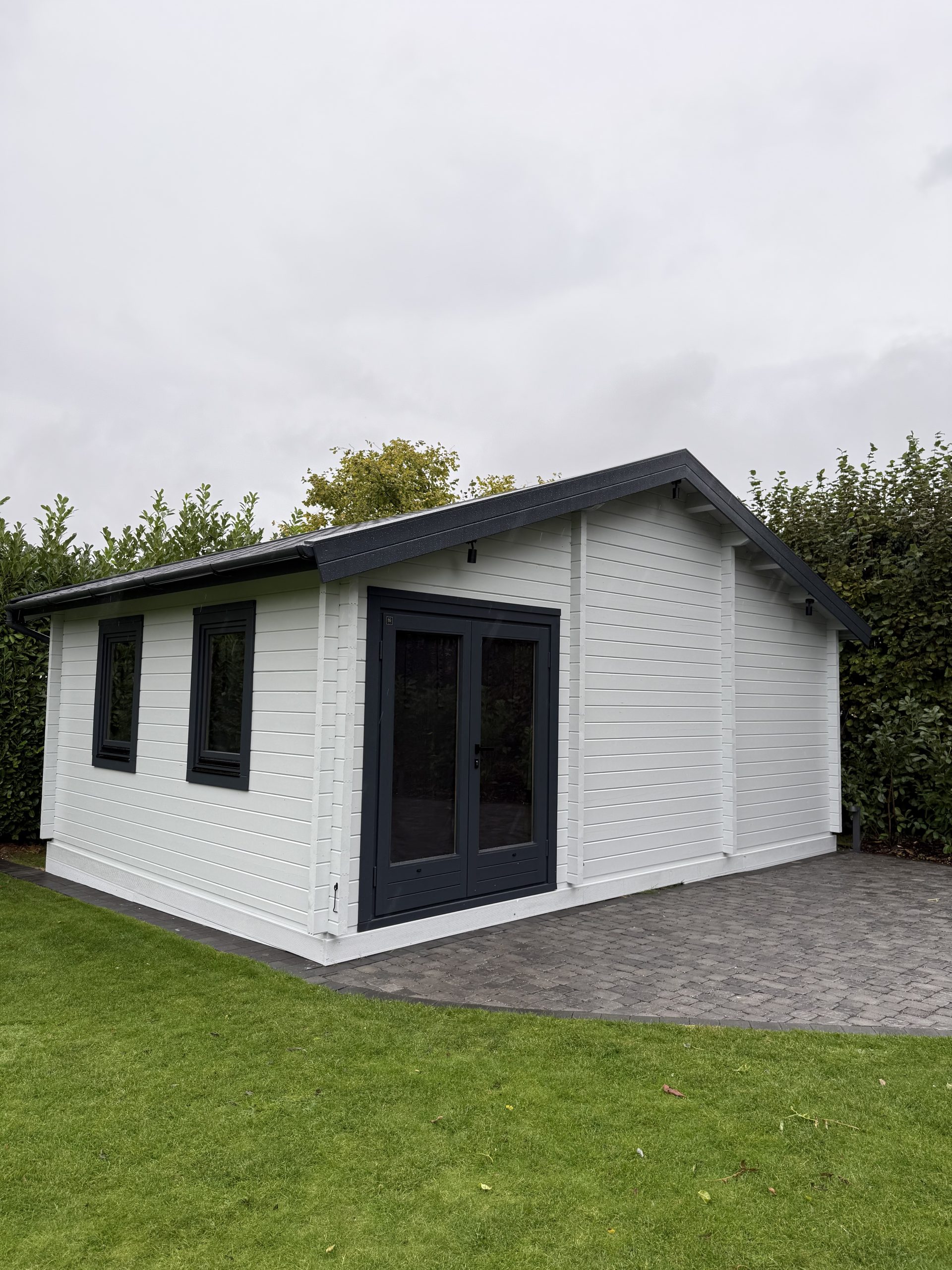
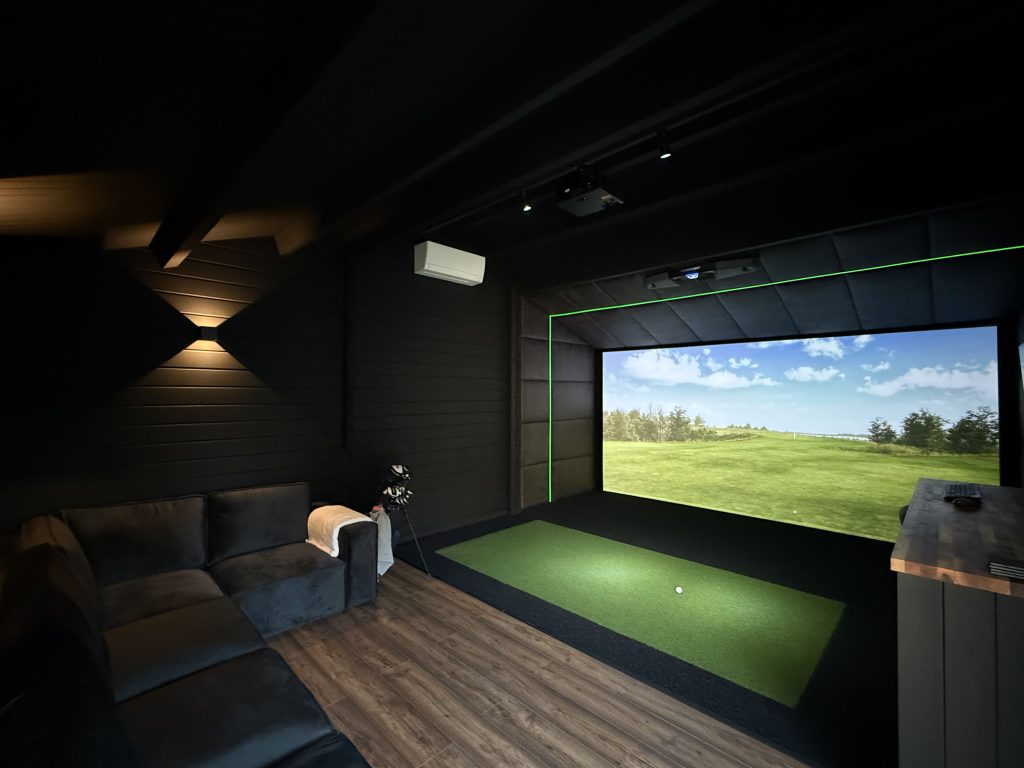
A log cabin build is a purpose-built structure in the garden, designed specifically to house a golf simulator. The dimensions are specified around the simulator requirements from day one, which removes the ceiling height and layout constraints that come with converting an existing space.
Log cabins are one of the most popular options we see across our client base. The finished room is entirely separate from the house, which keeps noise away from shared living spaces and gives the setup a dedicated, permanent feel.
We’ve completed log cabin builds across the UK, from Sheffield to Surrey. The Sheffield client described the process from first enquiry to finished room as smooth at every stage, with the first fix completed over three days in week one and the fit out finished the following week.
For clients with garden space and a clear vision of what they want, a log cabin produces a result that is difficult to match with a conversion.
Bespoke Garden Rooms
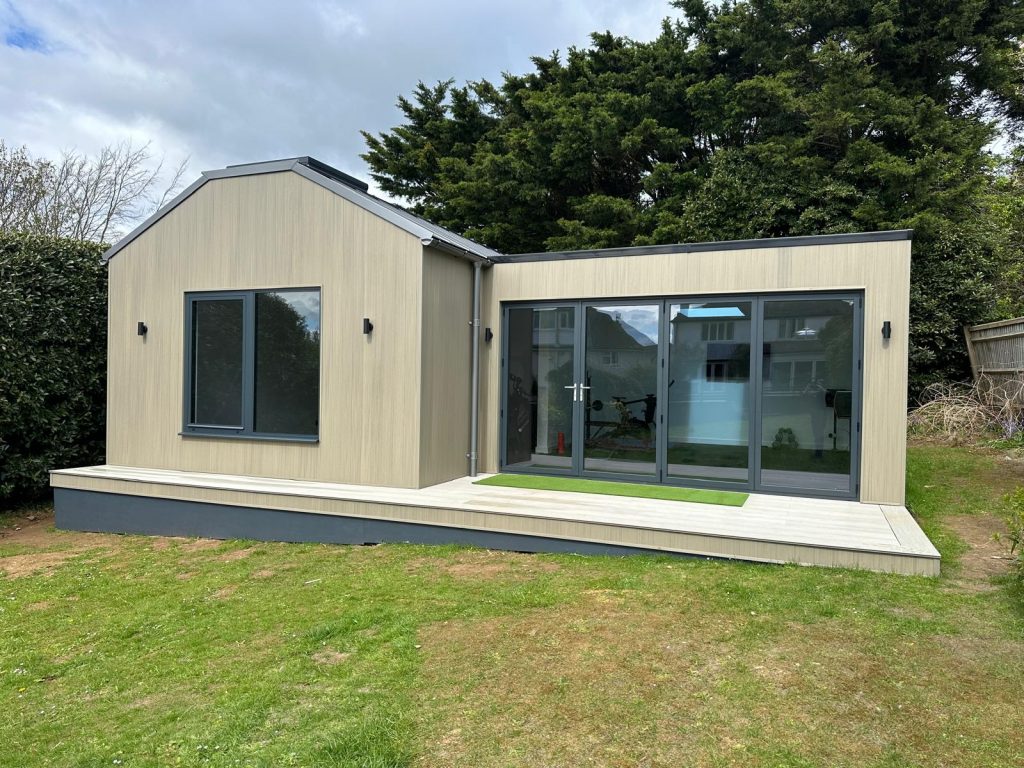
A bespoke garden room sits at the higher-specification end of the room type range. These are purpose-built structures with a higher standard of construction, insulation, and finish than a standard log cabin, and they often combine the golf simulator with other uses.
Our Essex project is the clearest example of what a bespoke garden room project involves. That build combined a gym, kitchen, golf simulator, and toilet in a single structure. GSR coordinated all subcontractors including plumbing and worked alongside a landscaper on site so the client did not have to manage the trades themselves. The client described the finished space as exactly what he had envisioned.
Bespoke garden rooms add genuine value to the property in a way that a garage conversion does not always do. The cost reflects the build quality, but for clients who want a permanent, high-specification space that works beyond just golf, they are the strongest long-term option.
Our guide on what is the best type of golf simulator room covers how to choose between these room types based on your specific property and priorities.
Barn and Outbuilding Conversions
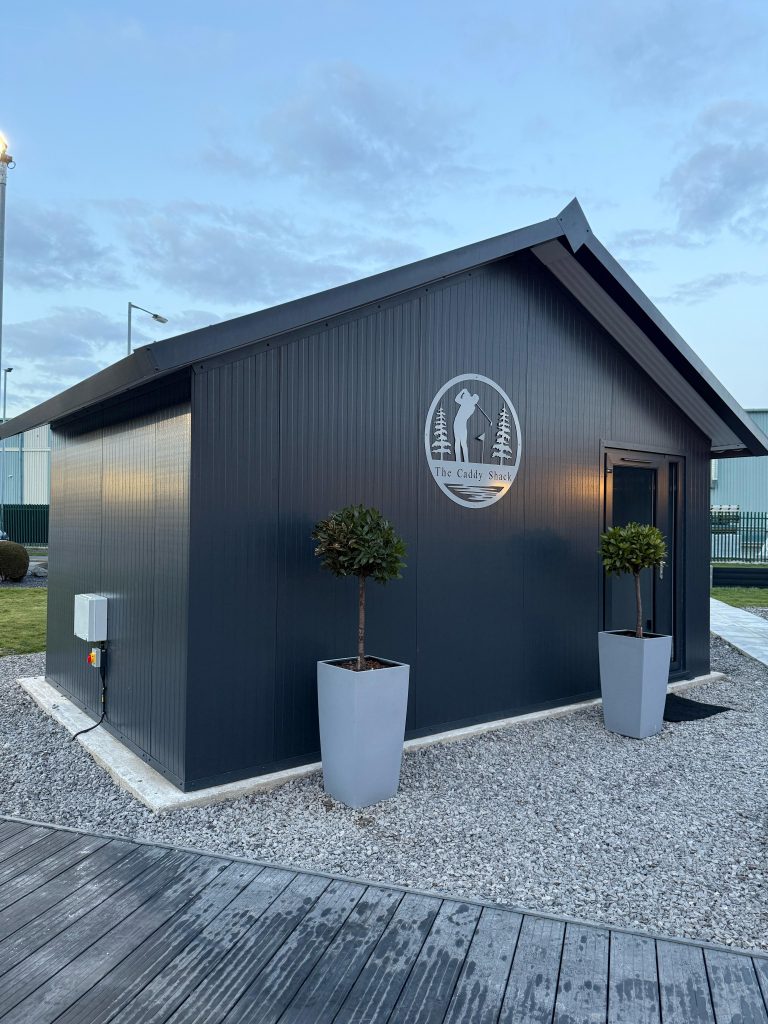
Some UK properties have existing outbuildings, barns, or large annexes that suit a golf simulator conversion well. These spaces often have the internal height and depth that modern garages lack, and converting them avoids the cost of building a new structure.
We have completed barn conversion projects in Hampshire and East Sussex. These projects tend to involve more preparatory work than a standard garage conversion, particularly around damp treatment and insulation, but the finished result can be exceptional. A barn with 3.5 metres or more of internal height gives you more working room than almost any other residential space.
Spare Room and Indoor Conversions
A spare bedroom or indoor room is the starting point some clients consider before looking at the other options. It works in specific circumstances but comes with the most constraints.
Standard UK ceiling heights in spare bedrooms sit at around 2.4 metres, which is not enough for a comfortable full swing with longer clubs. Indoor setups tend to work best for golfers who want to practise with irons and shorter clubs, or for a putting and chipping focused setup rather than a full simulator experience.
If your property does not have a garage or garden space, an indoor room is worth assessing honestly with a specialist before committing to equipment. For a clear view of the space requirements involved, our guide on how much space golf simulators need is the right place to start.
Types of Golf Simulator by Build Specification
Beyond the technology and room type, the level of build specification shapes what the finished room looks and feels like. At GSR, we offer three build routes that reflect the range of what clients typically want.
Foundation Build covers core simulator capability with a clean, practical finish. This suits clients who want a fully functional room with good budget control. The technology performs, the room works, and nothing is wasted on specification the client does not need.
Performance Build adds advanced lighting, acoustics, and integration detail on top of the core capability. The visual and playing experience is significantly elevated, and the room starts to feel like a purpose-designed space rather than a practical conversion.
Signature Build is a flagship room experience with premium build quality, full AV integration, and high-impact design. These are the projects where the room itself becomes something clients show to guests, not just a space they use privately.
The right build level depends on budget, how seriously the client takes the setup, and how the room fits into the broader property. We discuss this on every site visit rather than defaulting to one route across the board.
How to Choose the Right Type for You
The honest starting point is the space you have. The room type is often determined by the property rather than the preference. If you have a double garage with a 3 metre ceiling, a garage fit out is the practical starting point. If you have garden space and want a dedicated structure, a log cabin or garden room opens up. If you have an outbuilding with good internal height, a conversion may be the most cost-effective route.
Once the room type is clear, the launch monitor choice follows from the room dimensions and the budget. Camera-based for smaller or mid-sized rooms. Radar-based for larger rooms where the highest possible data accuracy is the priority.
The build specification sits on top of both of those decisions and reflects what the client wants the finished room to feel like.
Conclusion
The types of golf simulators available in 2026 cover a genuinely wide range, from a practical garage fit out with a solid camera-based launch monitor to a bespoke garden room with professional-grade radar technology and a premium finish throughout. Understanding both dimensions the technology and the room is what allows you to make a decision that serves your game and your home well for years.
GSR designs and installs across all room types and build specifications. If you want an honest conversation about which type of simulator setup suits your property and your budget, get in touch and we will start with a proper assessment of your space.