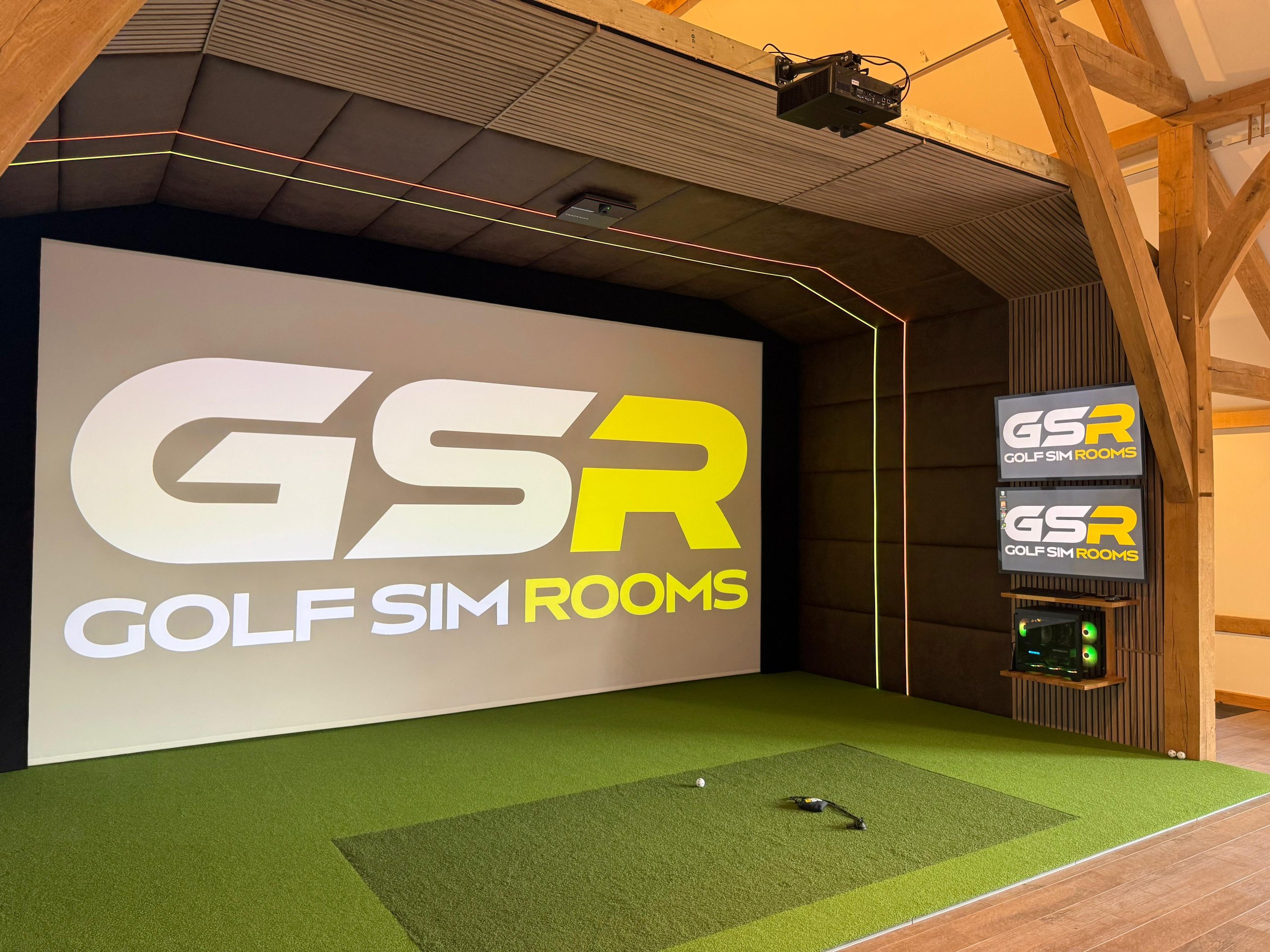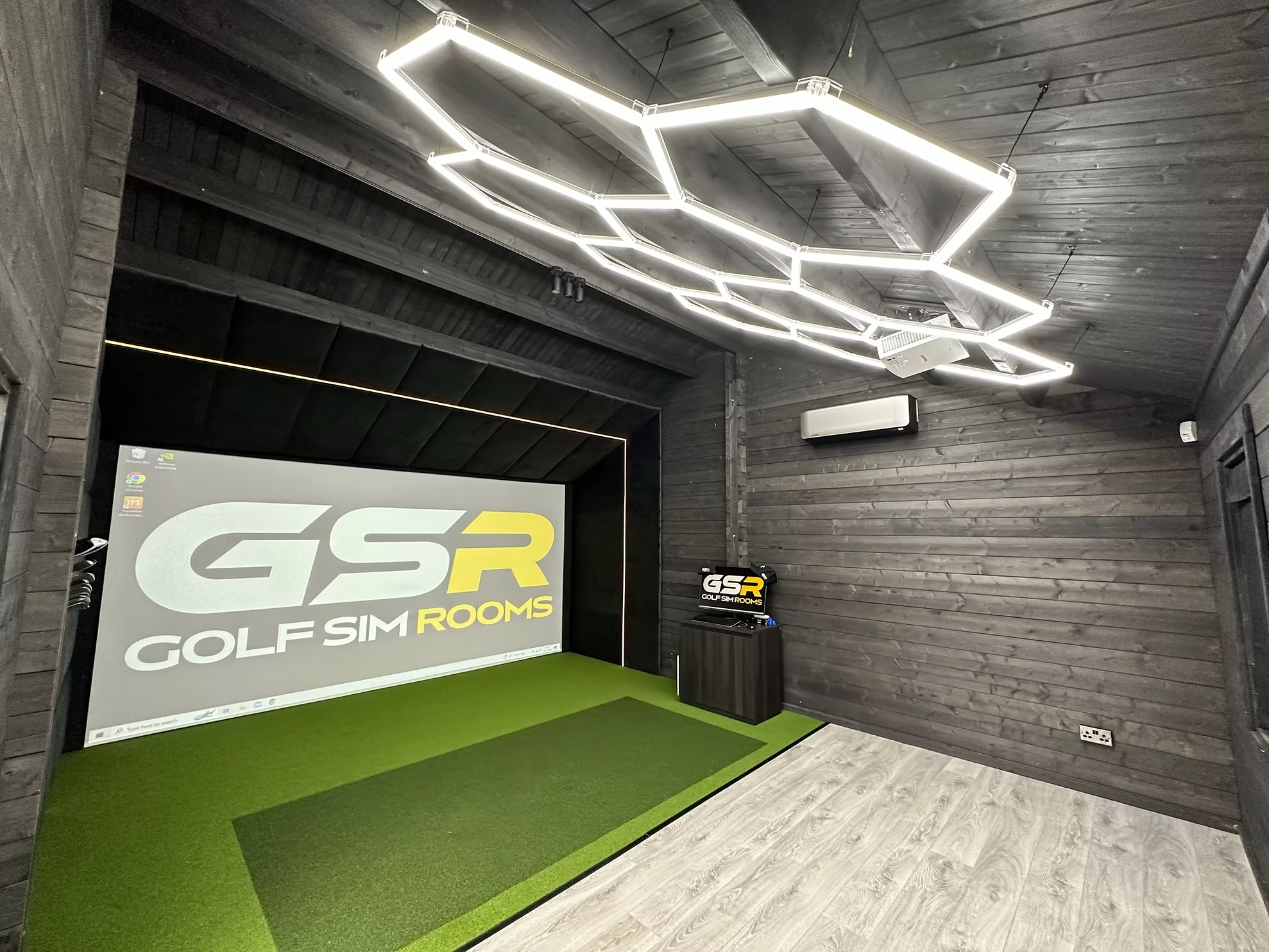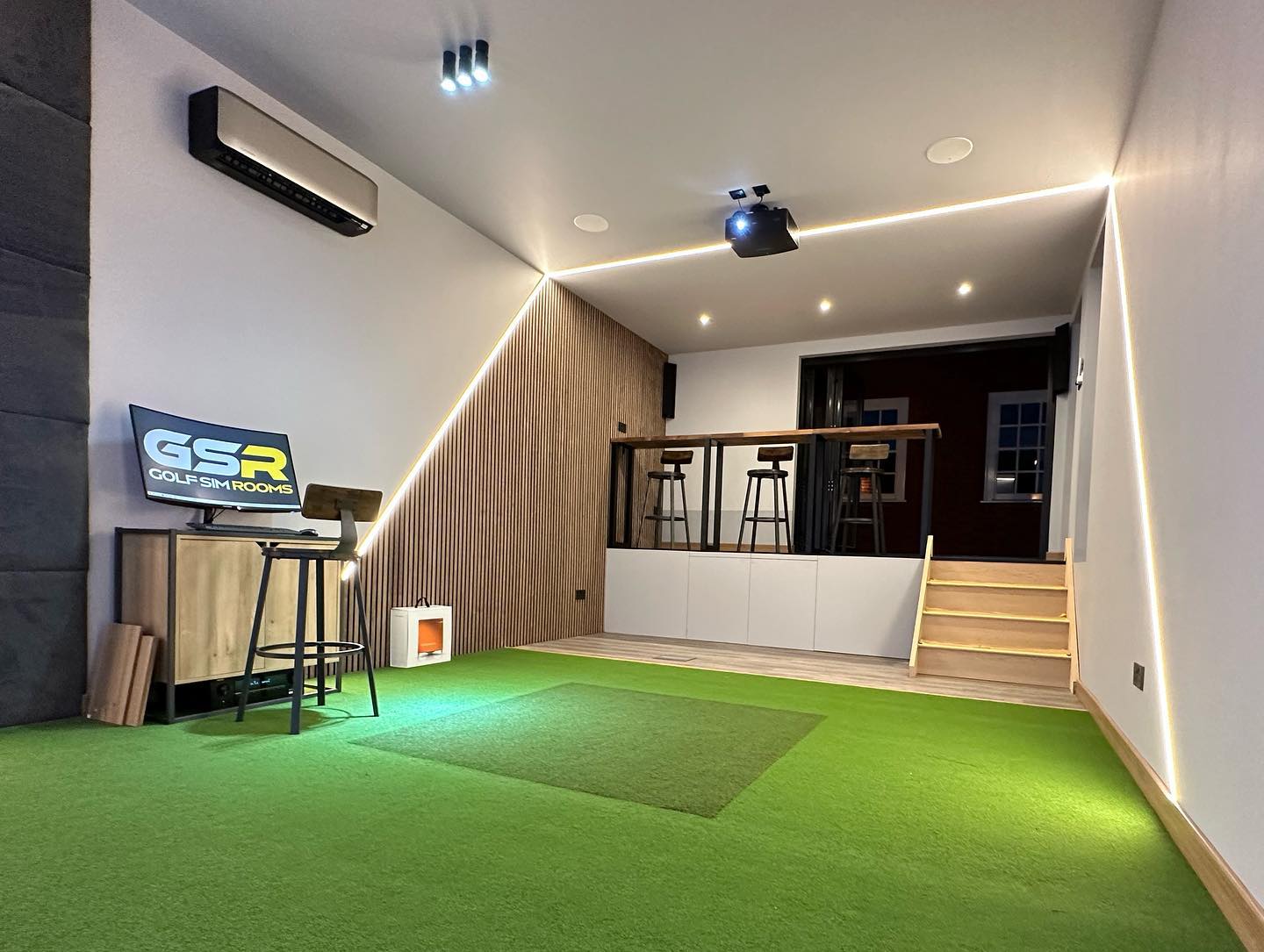


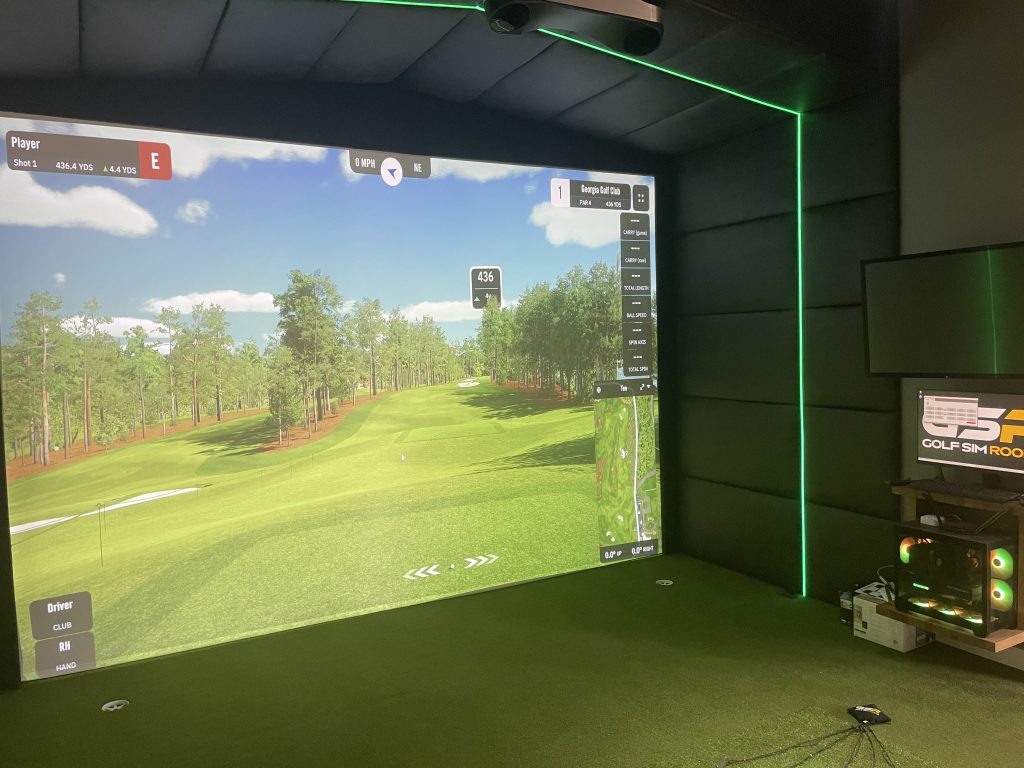
If you are looking for a golf simulator installer in Scotland, we cover the country with full turnkey installations. That means one team handling everything from the initial design and build through to the simulator fit out, calibration, and handover. We have completed projects in Scotland including a home simulator built to 6 metres long, 5 metres wide, and 3 metres high, and we bring the same process north of the border that we use across the rest of the UK.
Scotland is the home of golf, and the demand for quality indoor setups here is strong for a clear reason. The weather makes year-round outdoor practice genuinely difficult for large parts of the year. This page covers what a golf simulator installation in Scotland involves, what the process looks like when your installer is based further south, and what to expect from start to finish.
Why a Home Simulator Makes Particular Sense in Scotland
Scotland has a longer off-season than almost anywhere else in the UK when it comes to comfortable outdoor golf. Short winter daylight hours, frequent rain, frost, and wind close courses or make them unpleasant for a significant chunk of the year.
From working with clients across the UK, we’ve found that the value of a home simulator scales directly with how difficult the local climate makes outdoor play. In Scotland, that value is at the top end. A simulator room turns five months of lost practice into five months of consistent, structured improvement.
One of our Scottish clients summed up their experience clearly. They described a thorough initial consultation that laid out the options with no hard sell, timetables that were kept to, and a professional installation completed on time. That is the standard we hold on every Scottish project regardless of the distance involved.
How We Work as an Installer Covering Scotland
The obvious question for anyone in Scotland considering us is how a company based in the South of England delivers a quality installation several hundred miles away. It is a fair question and the answer matters.
We plan Scottish projects more thoroughly at the front end precisely because of the distance. The site visit, measurements, and design work are done properly upfront so that when the team travels, everything is ready. We do not want to be discovering problems on site in Scotland that should have been caught at the planning stage.
In our experience, thorough upfront planning works better than a local installer who rushes the design stage, because the quality of a simulator room is determined by the design and build standard, not by how close the fitter lives. A well-planned installation delivered by a specialist team produces a better long-term result than a nearby generalist who treats it like a standard building job.
We coordinate the full project including any subcontractors needed on site, and we keep communication tight throughout. On our more complex projects, we set up a dedicated chat group between the client, our project lead, and any third-party contractors involved. One client described how this kept everything running smoothly and according to plan, with the final installation completed efficiently and on schedule.
What Types of Installation We Deliver in Scotland
We cover the full range of installation types across Scotland.
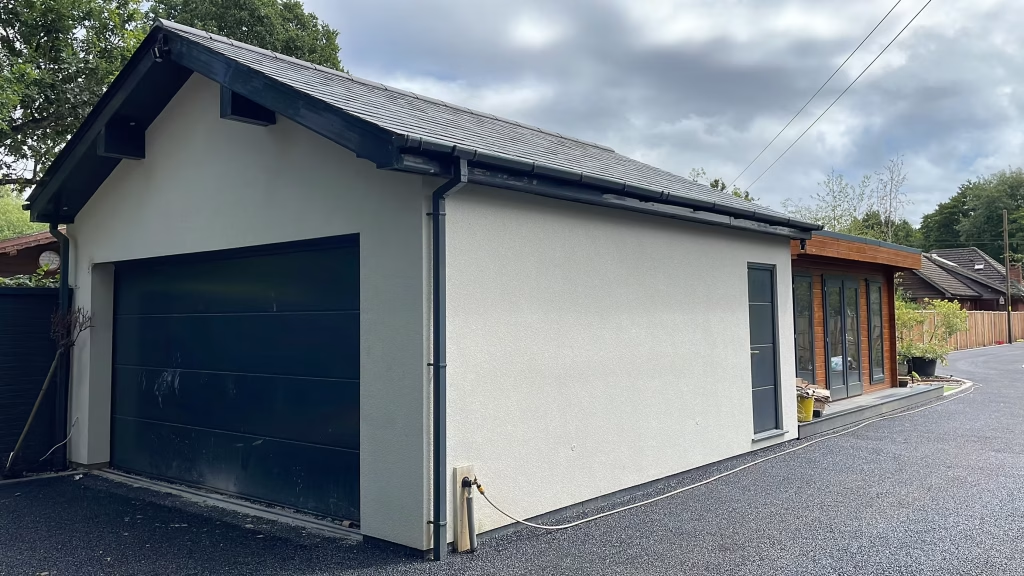
Garage fit outs are the most common starting point. A double garage with a ceiling height above 2.7 metres is a strong candidate. Many Scottish properties, particularly older detached and rural homes, have garages and outbuildings with the internal height that modern new builds lack.
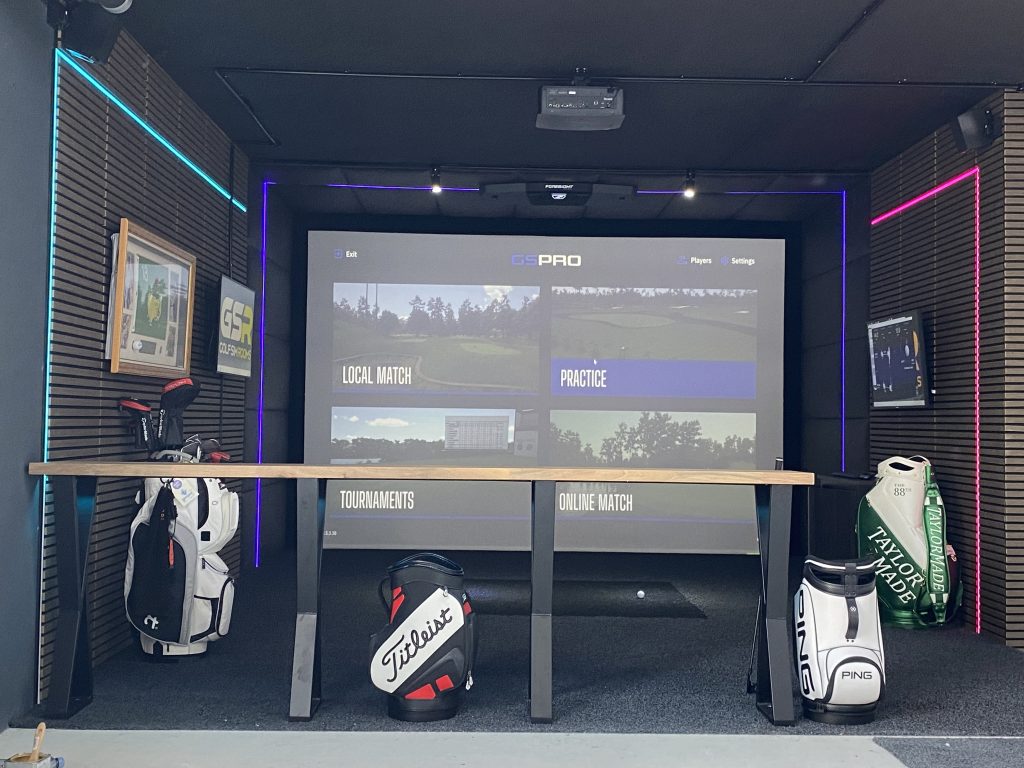
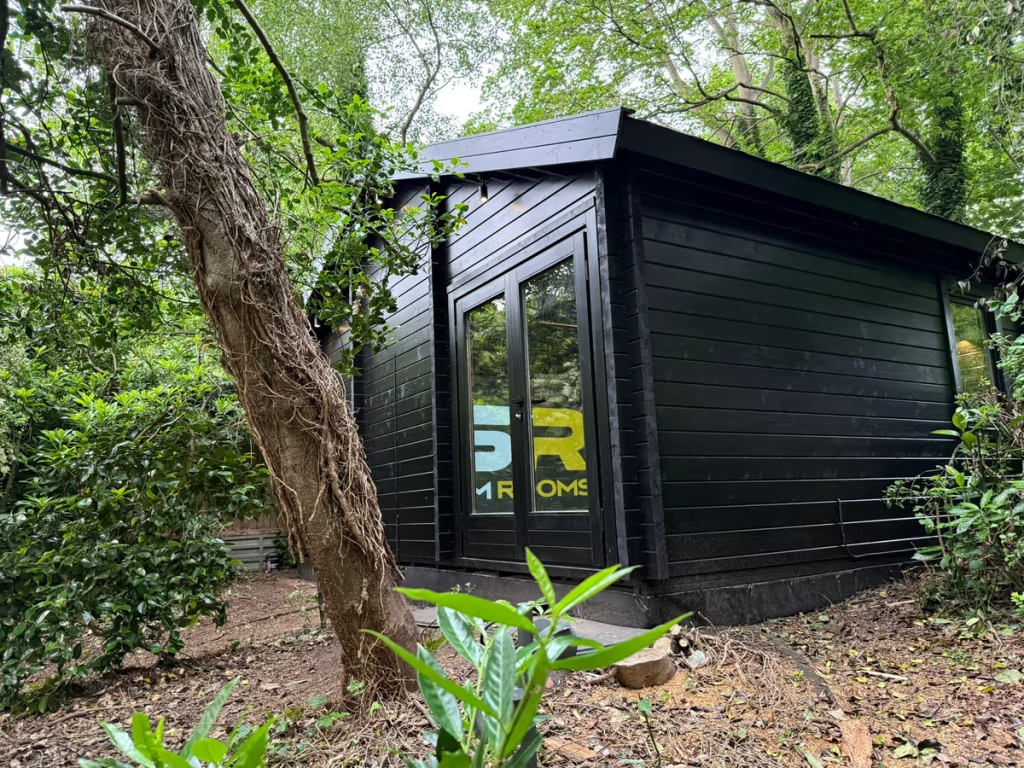
Log cabin builds suit clients with garden space who want a dedicated, purpose-built structure. A log cabin is specified around the simulator from the start, which removes the ceiling height and dimension constraints of converting an existing space. Given the Scottish climate, insulation quality is critical, and it is something we prioritise rather than treat as an afterthought.
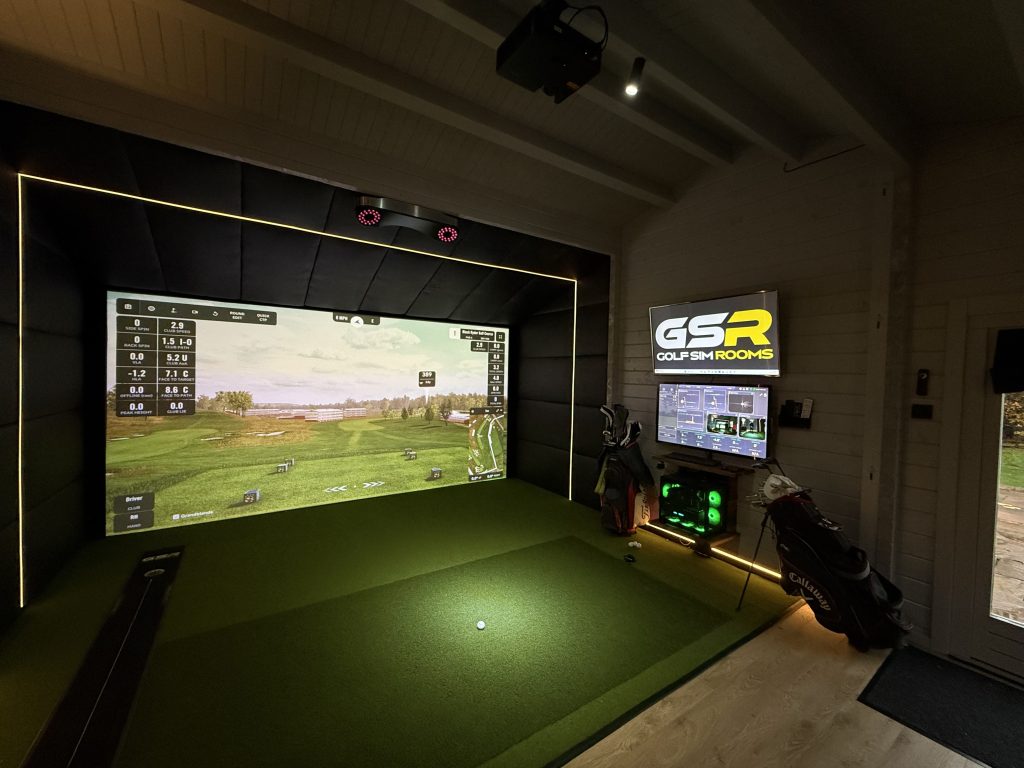
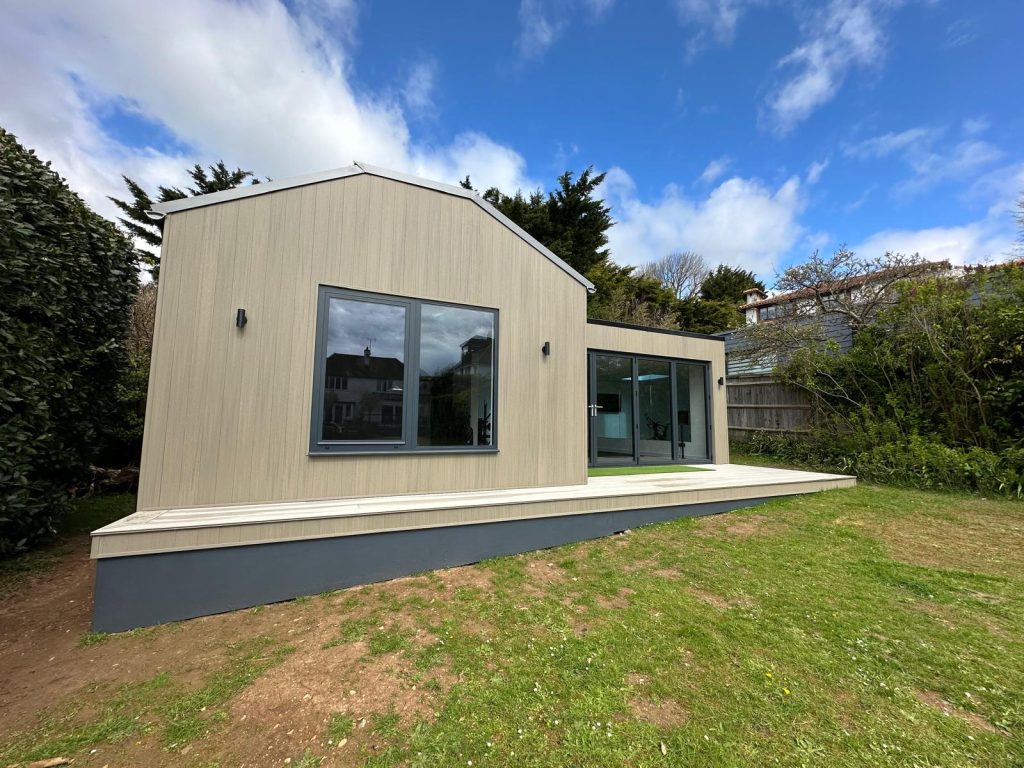
Bespoke garden rooms are the highest-specification option and suit clients who want a permanent, high-quality structure that adds genuine value to the property.
For a straight comparison of the two most popular options, our guide on log cabins vs garage golf simulators is worth reading before you decide.
The Scottish Climate and Why Insulation Matters More Here
This is where a Scottish installation genuinely differs from one in the south of England, and it is worth being direct about it.
A simulator room that is not properly insulated and heated will not get used through a Scottish winter. The cold is harder and it lasts longer. We’ve found that clients in colder regions who cut corners on insulation regret it within the first season, because the room becomes uncomfortable to use exactly when they need it most.
For log cabin and garden room builds in Scotland, we specify insulation to a standard that keeps the room usable year-round. For garage conversions, insulating the walls, ceiling, and floor properly is not optional. It is what determines whether the room delivers value across all twelve months or just the warmer ones.
We also recommend infrared panel heaters over standard convection heaters in Scottish rooms. In our experience, infrared works better than convection in a simulator space because it heats the room quickly without creating airflow that can affect launch monitor readings, and it holds the space comfortable more efficiently in a colder climate.
Space Requirements for a Golf Simulator in Scotland
The space requirements are consistent across the UK. You need a minimum of 2.7 metres of clear ceiling height at the hitting position. Three metres or more is significantly better. Room depth should be at least 4.5 metres from screen to back wall, and width should be at least 3.5 metres for a right-handed golfer swinging freely.
Our completed Scotland project at 6 metres long, 5 metres wide, and 3 metres high sits comfortably above every one of those minimums. That is why it plays as well as it does. The 3 metre ceiling gives an unrestricted swing, the 6 metre length gives generous room behind the ball, and the 5 metre width means no wall ever feels close during a full swing.
Our full guide on how much space golf simulators need covers all three measurements in detail with a self-assessment you can do before getting in touch.
What the Installation Process Looks Like
Every Scottish installation starts with a consultation and site assessment. We look at the space, take accurate measurements, and talk through how you want to use the room. That conversation shapes the equipment recommendation and the room design.
From there we produce a fully itemised quote covering the complete installation. What we quote is what the project costs, with no headline figures that exclude half the work.
For a straightforward garage fit out, the on-site installation runs over one to two days once the design and any preparatory work are complete. Log cabin and garden room builds run longer, typically two to four weeks from groundwork to a finished, playable room.
We test everything end to end before we leave, and every client gets a full walkthrough of the system. Our aftercare does not stop because a client is in Scotland. Much of the support we provide after handover is done remotely, and one of our clients elsewhere in the UK had a Saturday evening query resolved with a callback within five minutes and a remote login to fix the issue. Distance does not change that standard.
For a full picture of what a proper installation includes, our guide on what comes with a golf simulator installation is worth reading before you speak to any installer.
How Much Does a Golf Simulator Installation in Scotland Cost?
From the installations we have completed this year, a garage fit out with a solid mid-range setup typically sits between £18,000 and £55,000. A purpose-built log cabin with full fit out starts from around £30,000. A garden room installation at a higher specification level tends to fall between £50,000 and £150,000. These are all approximate prices based on our experience, and a tailored quote would be provided to you based on your requirements and specifications.
If a quote you receive looks significantly below those ranges, it is worth asking exactly what is included. Our guide on what to ask before you book a golf simulator installation covers the questions worth raising with any installer before you commit.
Conclusion
A golf simulator installer covering Scotland needs to plan thoroughly, build to a standard that handles the Scottish climate, and support the client properly after handover regardless of distance. We deliver full turnkey installations across Scotland, and our completed projects here show what is possible when the design and build are done right from the start.
Golf Sim Rooms covers Scotland with the same end-to-end process we use across the UK, from garage fit outs to log cabin builds and bespoke garden rooms. If you want an honest conversation about what would work for your property, get in touch and we will start with a proper consultation.