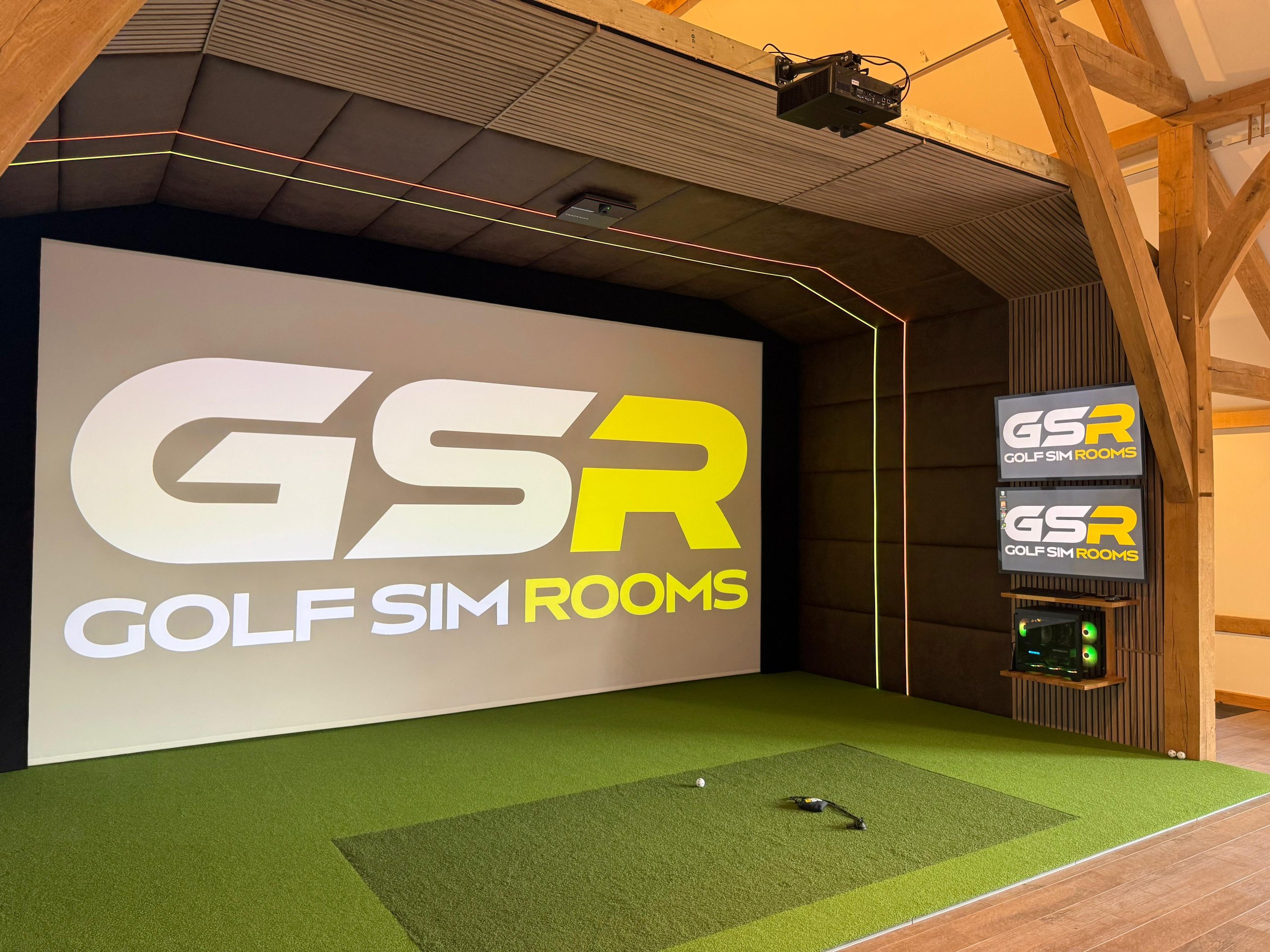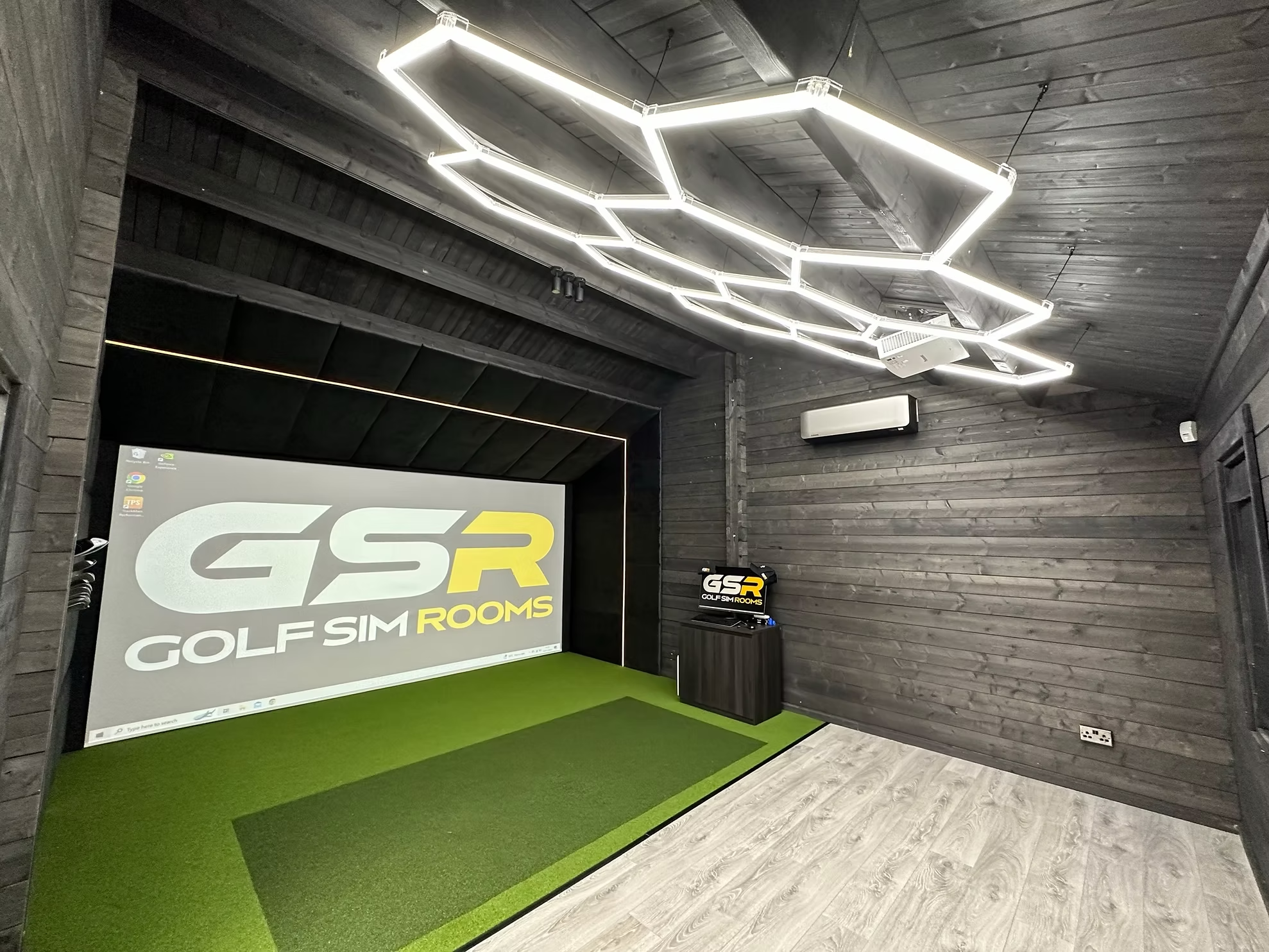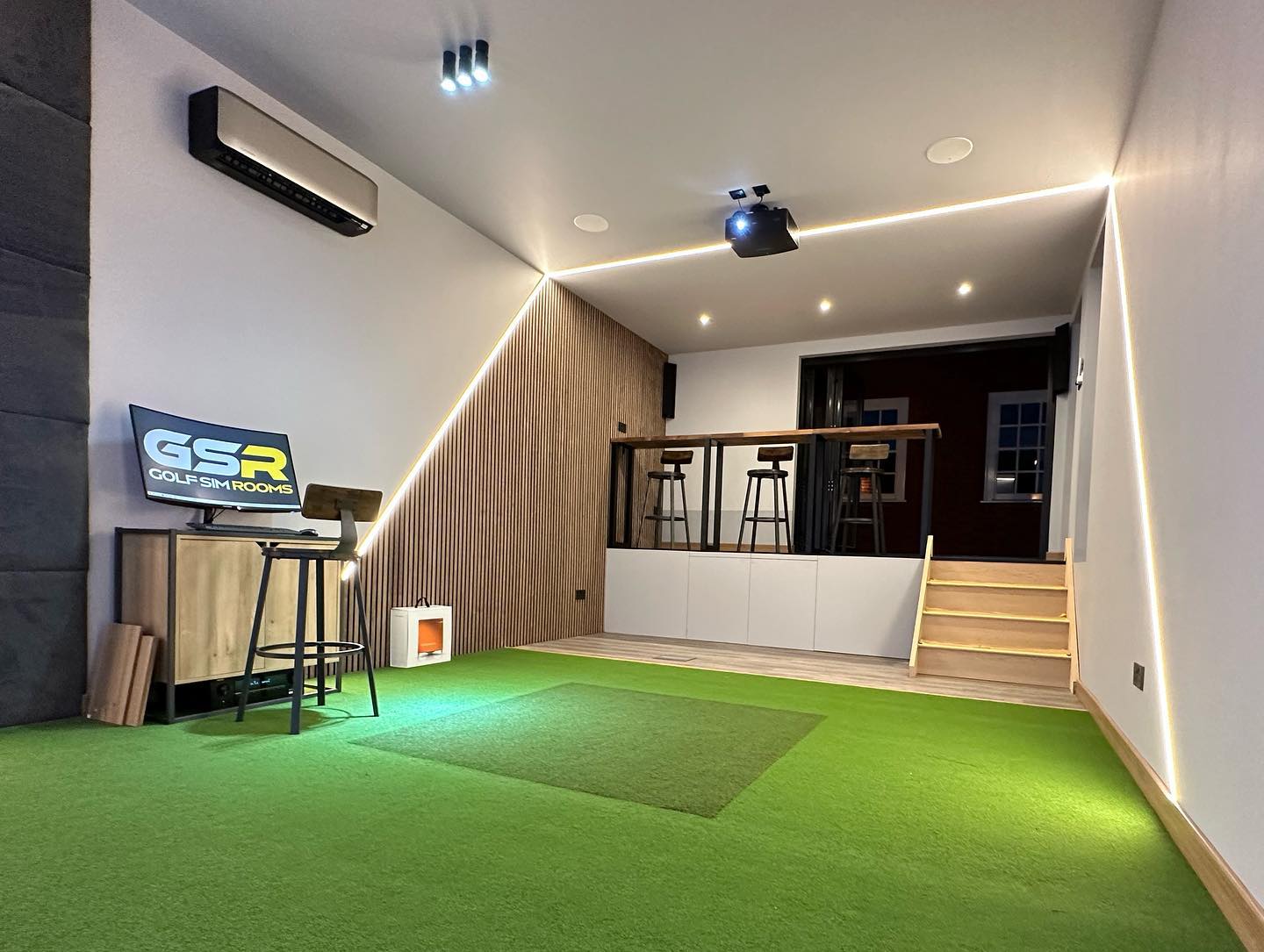


The most common mistake people make before buying a golf simulator is buying the equipment before assessing the room. Everything else follows from that one error. The launch monitor arrives, and only then does the buyer discover the ceiling is too low, the throw distance does not work, or the space needs a fortnight of preparation nobody budgeted for.
A golf simulator is a significant investment, and the expensive mistakes almost all happen before anything is installed. This covers the ones we see most often, so you can avoid them. Every point here comes from real projects and real conversations with clients who wished they had known sooner.
Mistake One: Measuring Floor Space Instead of Ceiling Height
People measure the footprint of a room, decide it is big enough, and stop there. Then they stand in the space with a club and realise the ceiling is the problem.
Ceiling height is the measurement that decides whether a full swing is possible, and it is the one checked last. The minimum we work to is 2.7 metres of clear height at the hitting position. Not the room average, not the apex. The exact point where you stand to swing. Below that, you shorten your swing to miss the ceiling, and a room you have to manage around is a room you use less each month.
In our experience, ceiling height matters more than floor area for long-term satisfaction, because you can work with a slightly tight footprint but you cannot work with a ceiling you keep hitting. Check the height first, before anything else. For the full set of measurements, how much space golf simulators need walks through them with a self-assessment.
Mistake Two: Buying the Launch Monitor First
It is tempting to start with the technology. It is the exciting part, and there are endless reviews to read. But buying the launch monitor before assessing the room is backwards.
Different launch monitors have different space requirements. Camera-based systems sit behind or above the ball. Radar-based systems sit to the side and need lateral space to track accurately. If you buy the unit before you know your room, you risk owning technology that does not suit the space you have.
We see this regularly. A client buys a launch monitor based on a review, then finds the tracking requirements or throw distances do not fit their room. Assess the space first, then match the technology to it. That order saves money and frustration.
Mistake Three: Underestimating Preparation Work
A cheap-looking quote is often cheap because it excludes the work that makes the room usable.
A garage that needs damp treatment, floor levelling, insulation, and rewiring costs real money to prepare before any simulator equipment goes in. People budget for the kit and the fit out, then get caught out by the groundwork the space actually needs.
From working with clients, we’ve found that the projects that overrun on budget are almost always the ones where preparation was not assessed upfront. A proper site survey identifies this work at the start, so it is planned and priced rather than discovered halfway through. When you compare quotes, check what preparation each one includes. The cheapest headline figure is frequently the one leaving the most out.
Mistake Four: Skimping on the Hitting Mat
People spend heavily on the launch monitor and then buy a cheap mat to save a few hundred pounds. It is a false economy.
The mat takes the impact of every single shot. A thin, hard mat gives jarring feedback through the shaft on every strike, which is uncomfortable over time and can encourage swing compensations. It can also affect how accurately some launch monitors read the ball.
A quality mat with the right give replicates the feel of turf closely enough that it does not interfere with your natural swing. In our experience, a good mat works better than a premium launch monitor paired with a cheap mat, because the mat is what you physically interact with on every shot and a bad one undermines everything above it. It is the last place to cut costs, not the first.
Mistake Five: Ignoring Lighting and Glare
Lighting is an afterthought for most buyers, and then it becomes an immediate problem once the room is finished.
Bright overhead lights pointed toward the screen wash out the projected image. The picture goes pale, contrast disappears, and the immersive quality that makes a simulator enjoyable drains away. Fixing it after the room is built means rewiring or adding fittings to a finished space.
The solution is to plan lighting from the start, positioned behind the golfer rather than above the screen, so the hitting area is lit without any light reaching the projection surface. This is a design decision, not an accessory. For the full picture on this, how we get rid of glare in a golf simulator room covers it in detail.
Mistake Six: Forgetting About Heating
A room that is cold in November sits unused until March. That is five months of a significant investment doing nothing, and it is entirely avoidable.
UK garages and outbuildings are cold spaces. Getting one comfortable enough to use through winter needs proper insulation and a reliable heat source. People plan the exciting parts of the build and forget that a cold room simply does not get used when the temperature drops.
We recommend infrared panel heaters over standard convection heaters, because they warm the space quickly without pushing air across the hitting zone where it can affect launch monitor readings. Plan heating in from the start, not as a fix once the room is already cold.
Mistake Seven: Not Checking Planning Rules Early
For a garden build, planning is something to check at the start, not after you have committed.
Most garden structures fall under permitted development, but conservation areas, listed properties, National Parks, and certain estates with restrictive covenants all carry exceptions. Discovering a restriction after you have planned the build is a costly way to learn about it.
A quick check with your local authority at the outset removes the risk. For the detail on what usually applies, golf simulator garden rooms and planning covers the rules.
Mistake Eight: Choosing an Installer on Price Alone
The cheapest quote and the best value are rarely the same thing.
A low quote that excludes preparation, cuts corners on the mat, ignores lighting, and offers no meaningful aftercare will cost more in the long run than a complete quote that does the job properly. The difference shows up not on install day but over the years you own the room.
Aftercare is the part people forget to ask about and later wish they had. Technology develops faults. Projectors need recalibrating. What matters is whether your installer responds when something goes wrong. One of our clients texted on a Saturday evening and had a callback within five minutes with a remote login to sort the issue. That kind of support does not show up in a headline price, but it is what you are really buying. For the questions worth asking any installer, what to ask before you book a golf simulator installation covers them.
Mistake Nine: Buying Without Thinking About How You Will Use It
Some people buy a simulator as a party feature, then wonder why it does not lower their handicap. Others buy it for serious practice and over-specify on entertainment features they never use.
Being honest about how you will actually use the room shapes every other decision. A room for serious game improvement wants accurate data and a good practice setup. A room primarily for entertaining family and friends wants immersion and ease of use. Knowing which you are buying prevents spending in the wrong places.
For an honest look at who gets real value from a room, is a home golf simulator worth it is worth reading before you commit.
Conclusion
The mistakes people make before buying a golf simulator are almost all about planning rather than product. Measuring the wrong thing, buying equipment before assessing the room, underestimating preparation, and skimping where it matters most are the errors that turn a great investment into a compromised one.
Avoiding them comes down to assessing the space properly first and working with someone who tells you the truth about what your room needs. Golf Simulator Rooms starts every project with a proper survey and honest advice across the UK. If you want to get it right the first time, get in touch and we will start with a proper look at your space.