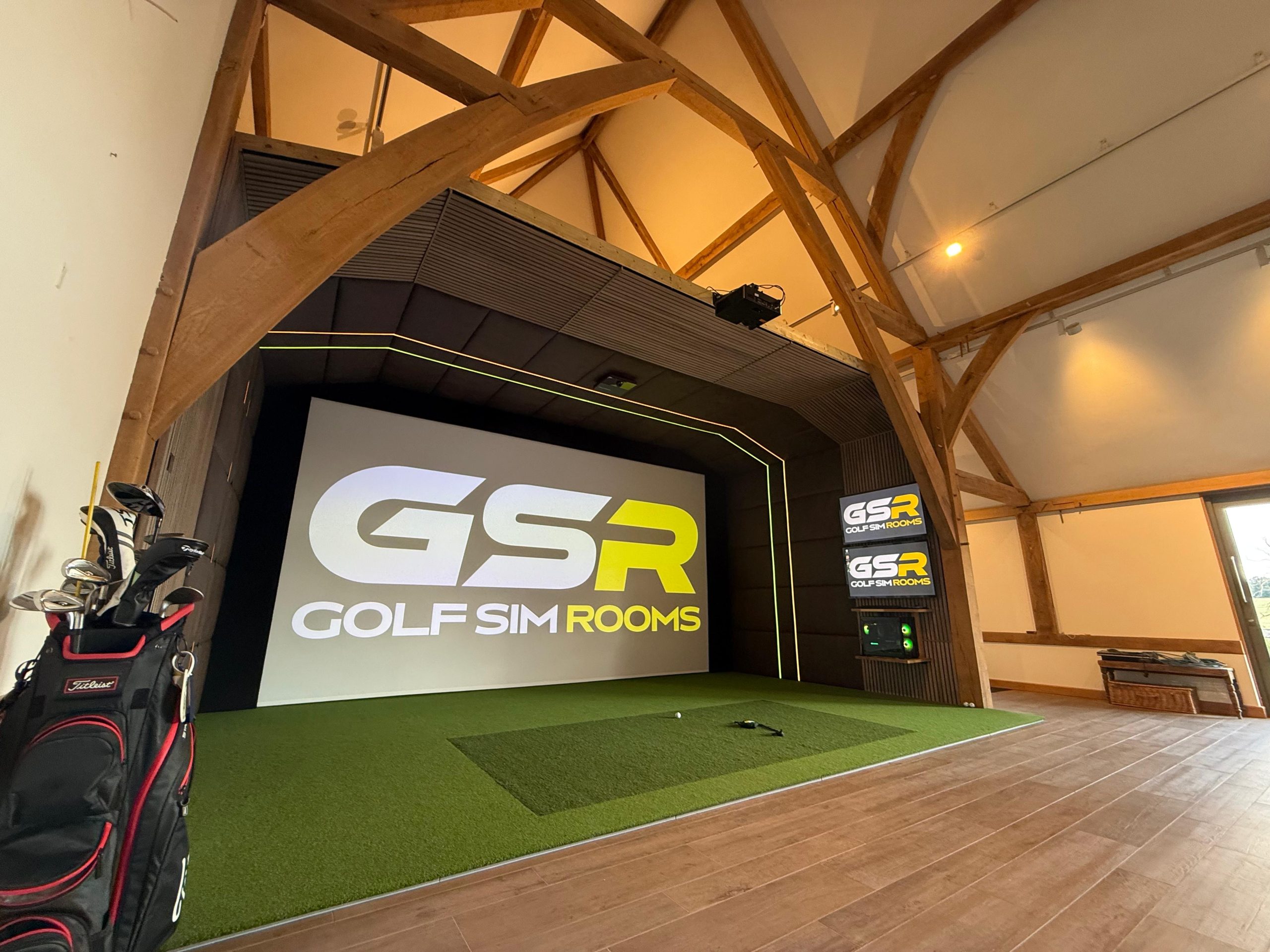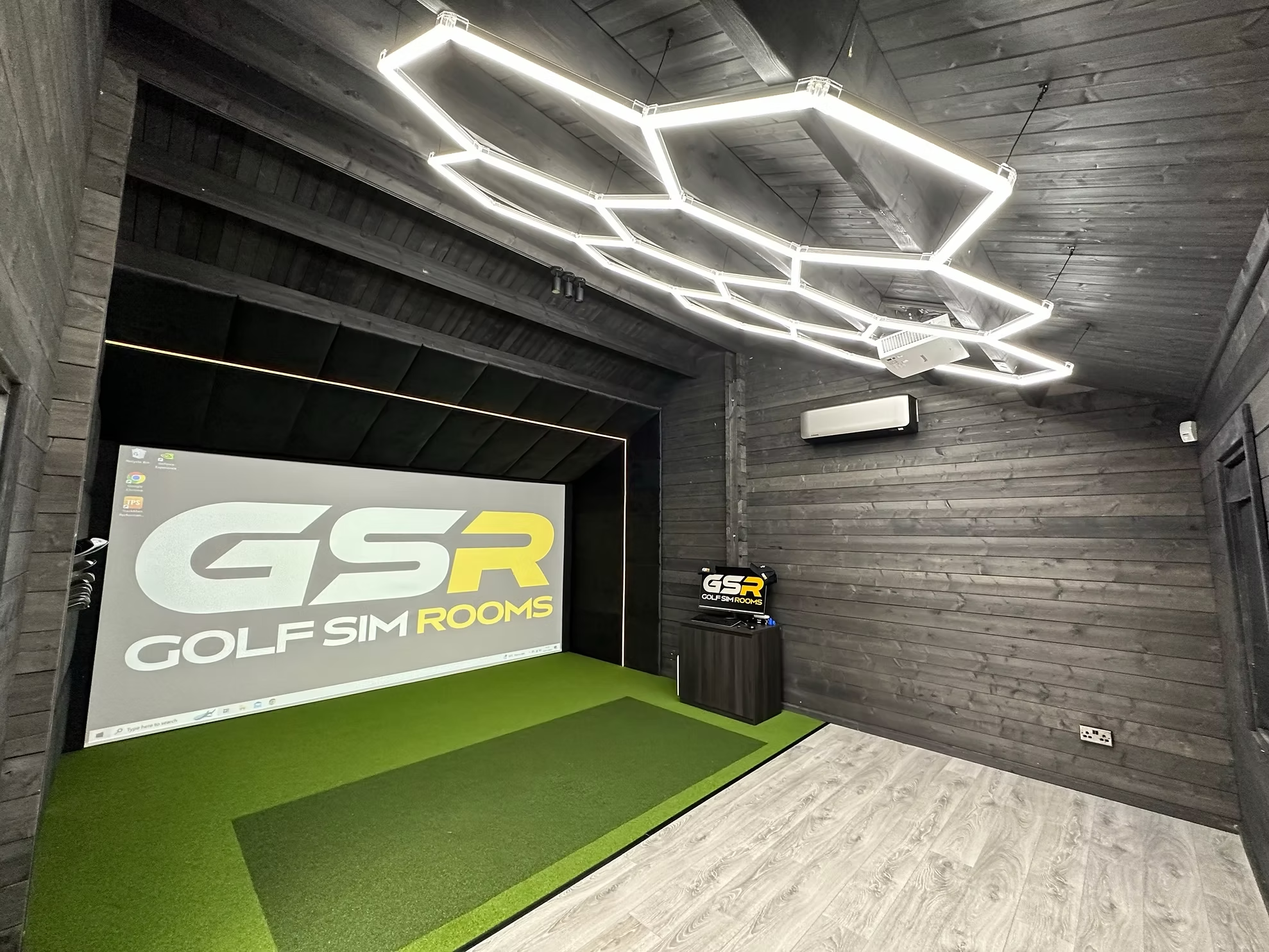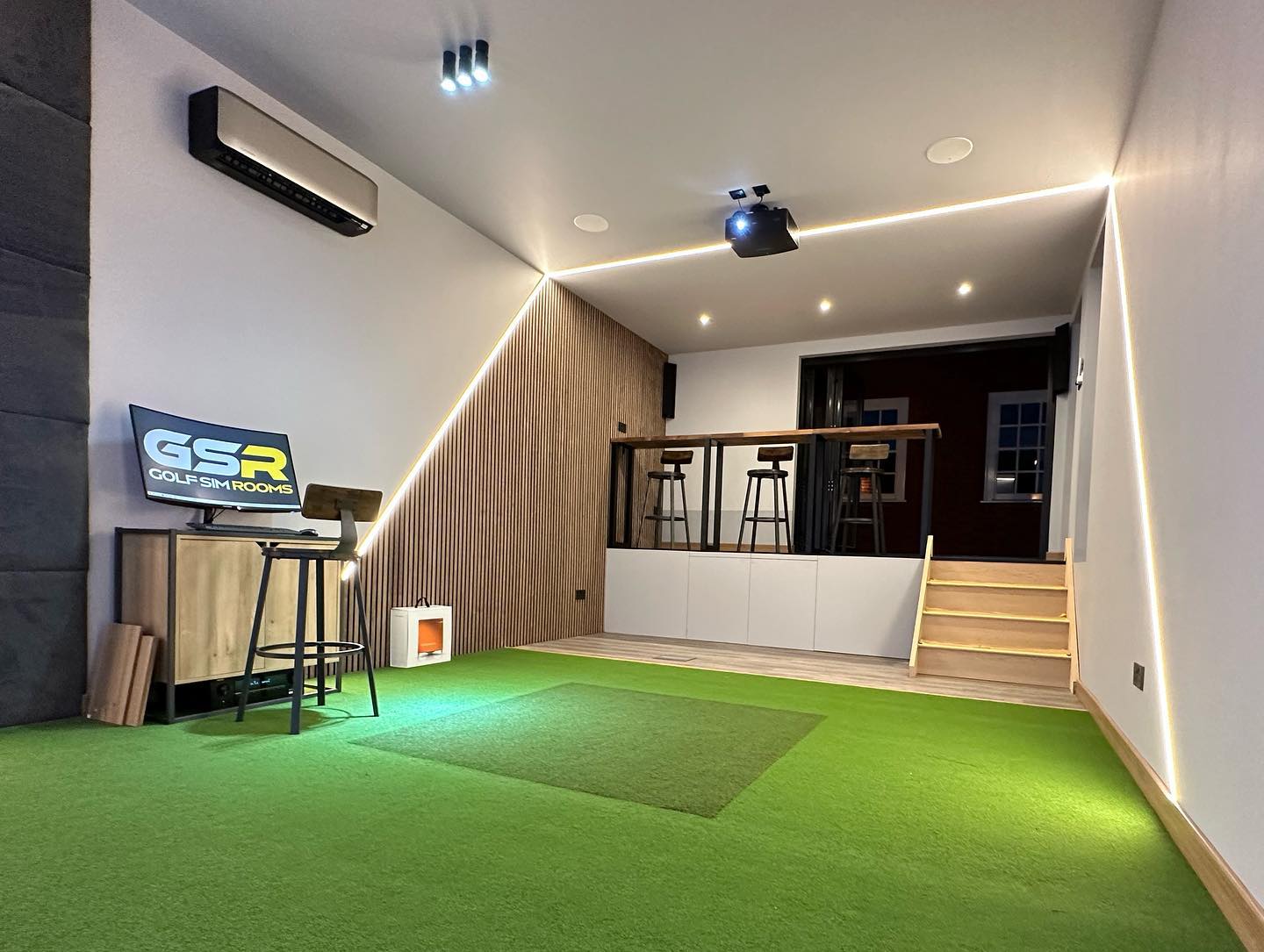


Space is the first real barrier for most people considering a golf simulator at home. The technology is more accessible than it has ever been, but none of it works if the room you have cannot physically accommodate a full swing.
This is one of the most common questions we get, and the honest answer is that it depends on a few specific measurements rather than a simple square footage figure. Get those measurements right and most spaces are more workable than people expect. Get them wrong and you will know about it the first time you take a full swing with a driver.
Here is what actually matters when it comes to golf simulators space…
The Three Measurements That Matter
When assessing whether a room will work for a golf simulator, there are three dimensions to focus on: ceiling height, room depth, and width. All three matter, but they do not all matter equally.
Ceiling height is the one that causes the most problems in UK homes. It is also the hardest to fix without significant building work, which is why it needs to be the first thing you check
Room depth determines how far you can stand from the screen and still have space behind you for a full backswing. Too shallow and the experience feels cramped even if the ceiling is fine.
Width affects how freely you can swing without worrying about the walls to your left or right. A room that is too narrow makes golfers cautious and unnatural in their swing, which defeats the purpose of practising at home.
Ceiling Height: The Number Most UK Rooms Fail On
For a comfortable full swing with a driver, you need a minimum of 2.7 metres of clear ceiling height. That means clear no beams, no light fittings hanging down, no ducting running across the swing path. The actual clearance matters, not just what the ceiling technically measures.
Ideally you want 3 metres or more. At 3 metres you have genuine headroom for a natural swing with any club, and taller golfers do not need to think about it at all. At 2.7 metres it is workable but tighter, and some players with steep swing planes will still catch the ceiling with longer clubs.
Standard UK new-build ceiling heights are 2.4 metres. That is not enough for a full unrestricted swing. Older properties with higher ceilings, double garages, and purpose-built structures tend to be far better suited.
The practical test is straightforward. Stand in the space and take a slow-motion swing with a driver. If you are thinking about the ceiling at any point during that swing, the room is not tall enough for comfortable regular use.
Room Depth: How Much Space You Need Behind You
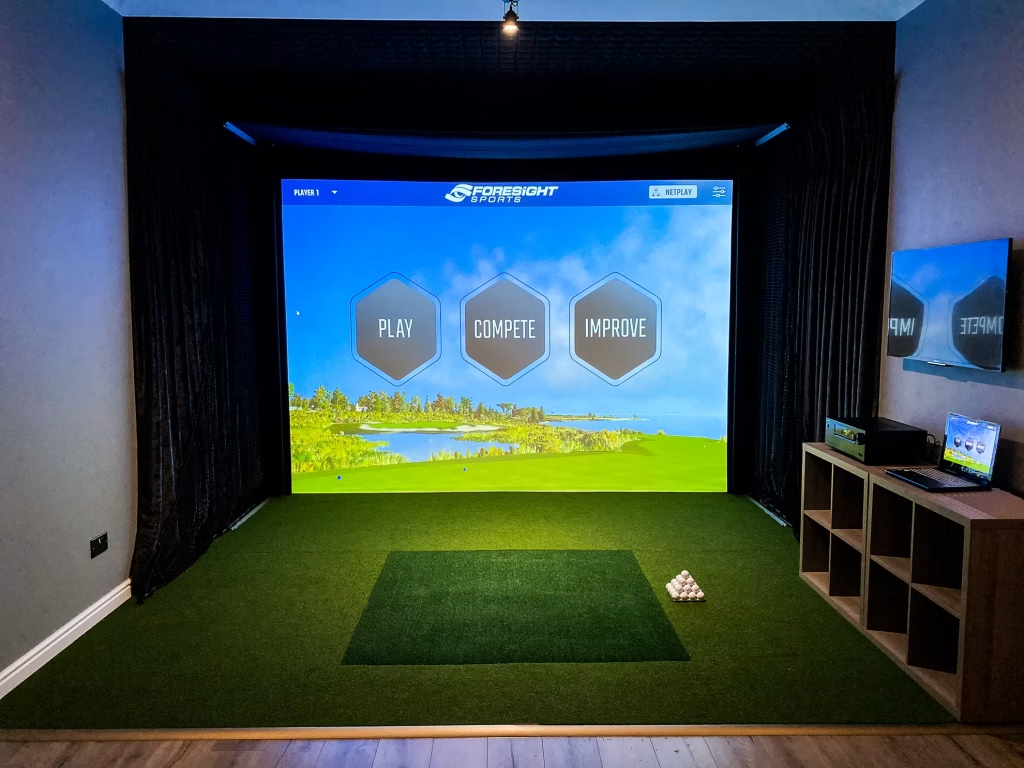
Room depth runs from the impact screen at the hitting end to the back wall behind the golfer. The minimum you want to work with is around 4.5 metres. At that depth you have enough room for the screen and its frame, the hitting mat, and a reasonable amount of space behind the ball position.
5 metres is more comfortable, and 6 metres gives you a setup that feels genuinely open rather than functional but tight.
One thing that catches people out is that the screen and its frame take up more depth than expected. A typical impact screen frame adds 30 to 50 centimetres at the front of the room before you even get to the mat and the hitting position. Factor that in when you are measuring.
The other consideration is launch monitor placement. Camera-based systems like SkyTrak or Uneekor are typically positioned behind the ball, which means they need space at the golfer’s end of the room. Radar-based systems like Foresight GCQuad sit to the side, which changes the depth equation slightly. Know which type of launch monitor you are planning to use before you finalise your room layout.
Width: The Dimension People Underestimate
Width tends to get less attention than height and depth, but it matters more than most people realise until they are actually swinging in the space.
A minimum width of 3.5 metres is needed for a right-handed golfer to swing without feeling like the walls are in play. 4.5 metres is comfortable. Anything over 5 metres and width stops being a factor at all.
Left-handed golfers need to think about this from the opposite side. The trailing arm on the follow-through is the one that needs clearance, so check that side of the room specifically rather than assuming symmetry will take care of it.
If you are planning a setup that two people might use, one right-handed and one left-handed, you need enough width to comfortably accommodate both swing directions. That usually means 5 metres or more is genuinely useful rather than just nice to have.
What Room Types Tend to Work in UK Homes
Given those numbers, certain room types come up consistently as the most practical options for UK homeowners.
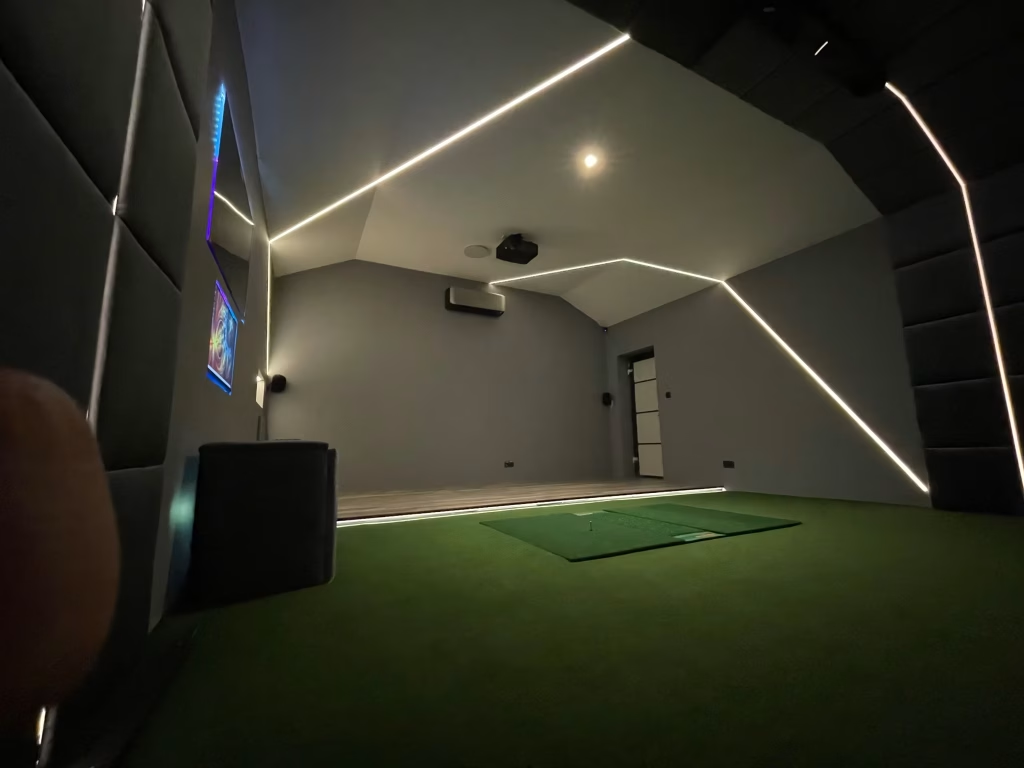
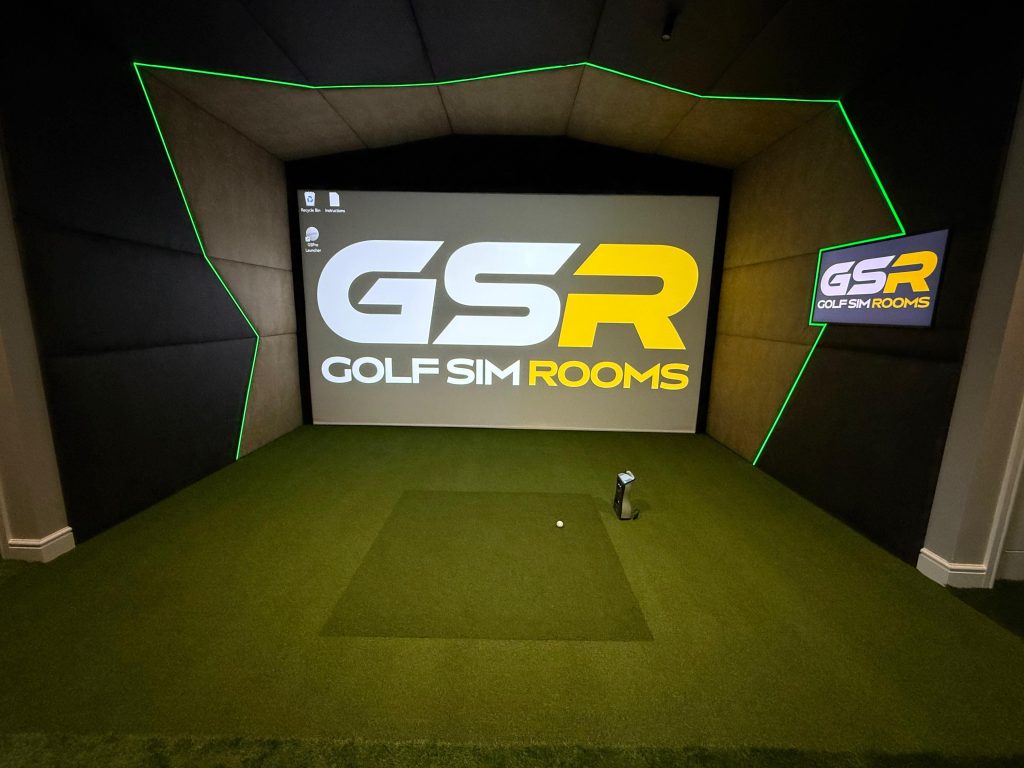
Double garages are the most common starting point. They typically offer enough width and depth, though ceiling height can still be marginal depending on the build. A double garage that has been properly converted and insulated is one of the most reliable golf simulator spaces available without any new building work. We love a garage conversion.
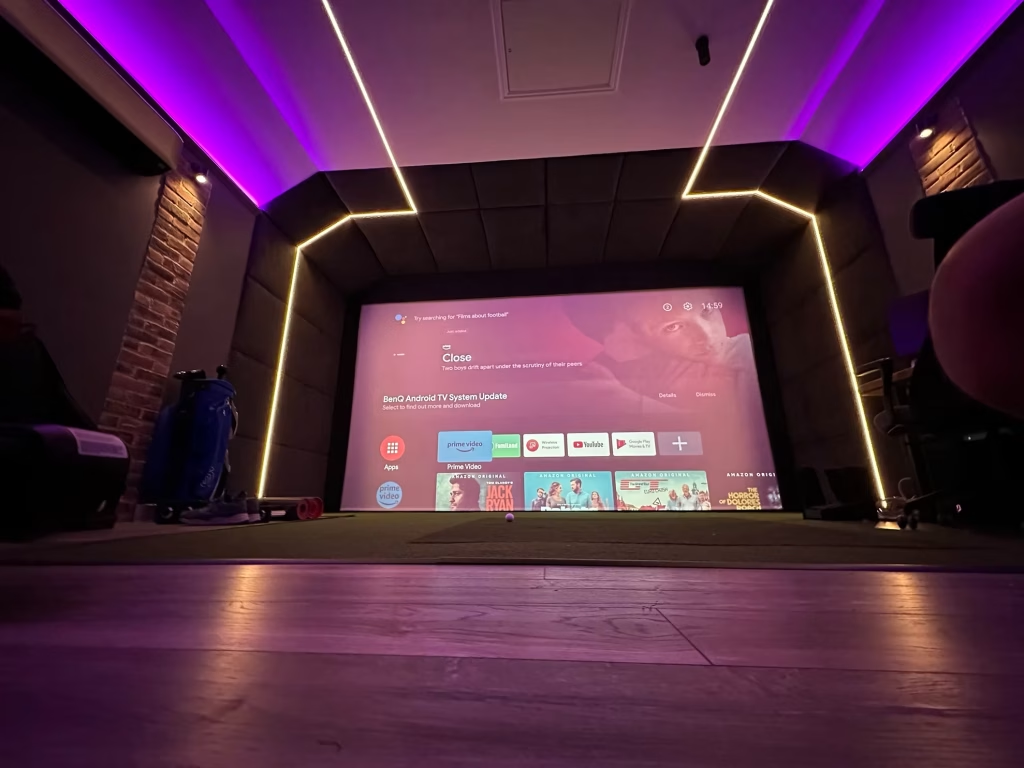
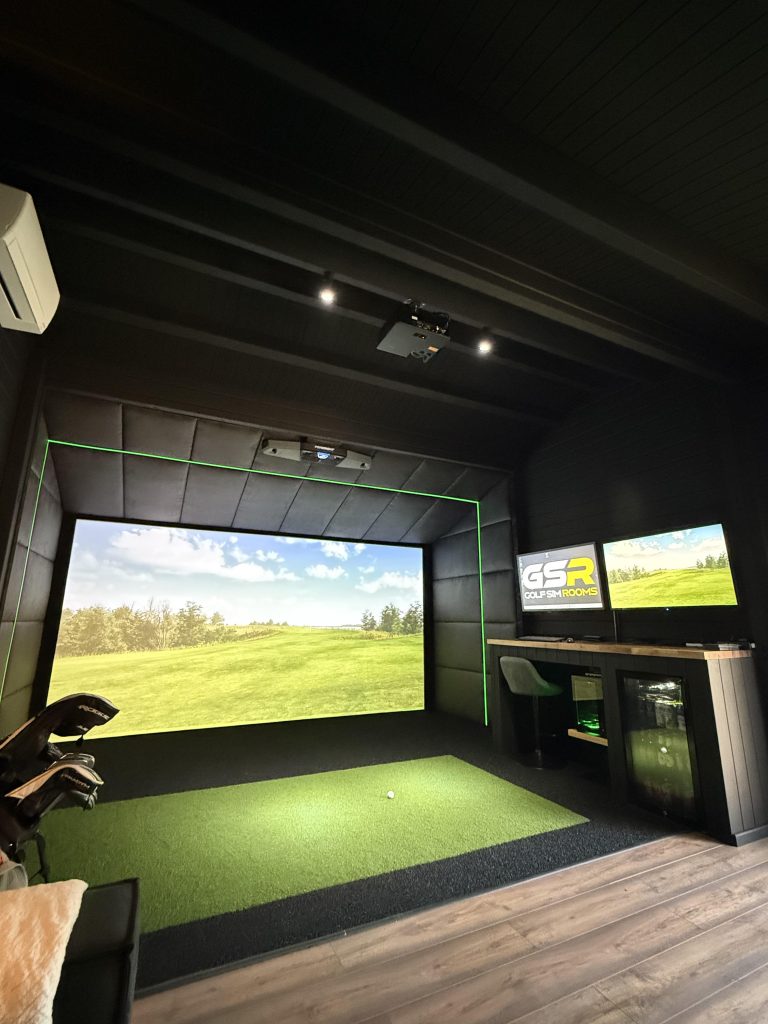
Log cabins built for the purpose sidestep most of these issues because the dimensions are planned around the simulator from the start. You specify what you need and the structure is built to match. This is one of the reasons purpose-built log cabin setups tend to feel more polished than conversions.
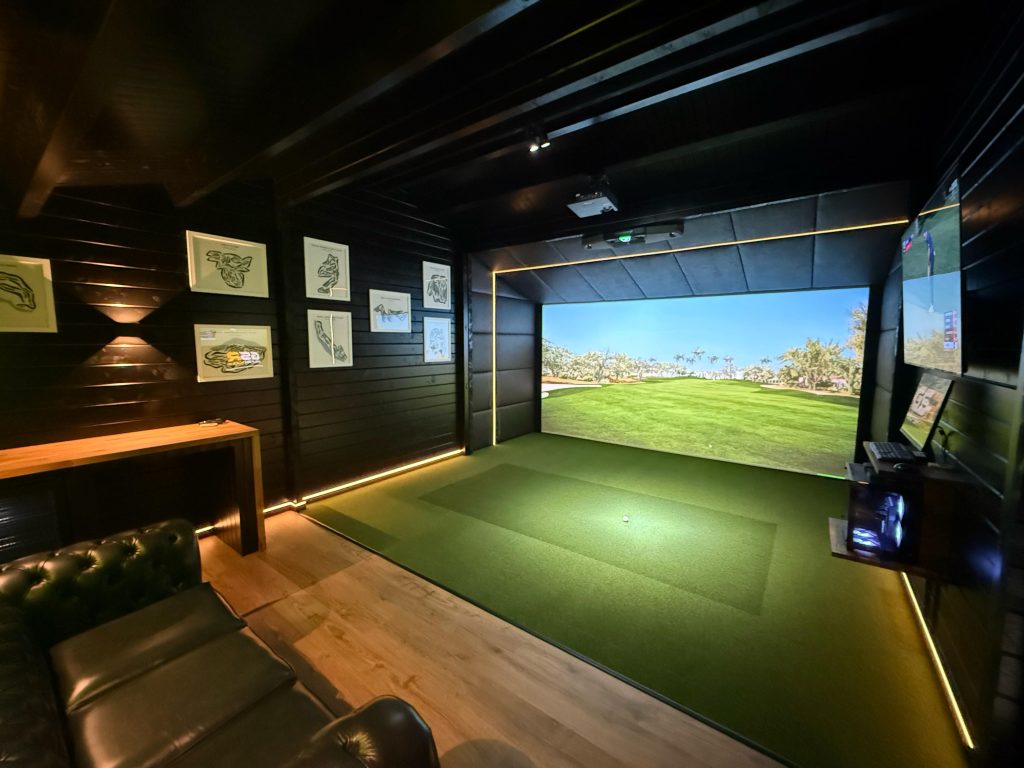
Bespoke garden rooms work well for the same reason as log cabins. A garden room designed with golf in mind will have the ceiling height, depth, and width built in rather than compromised around an existing structure.
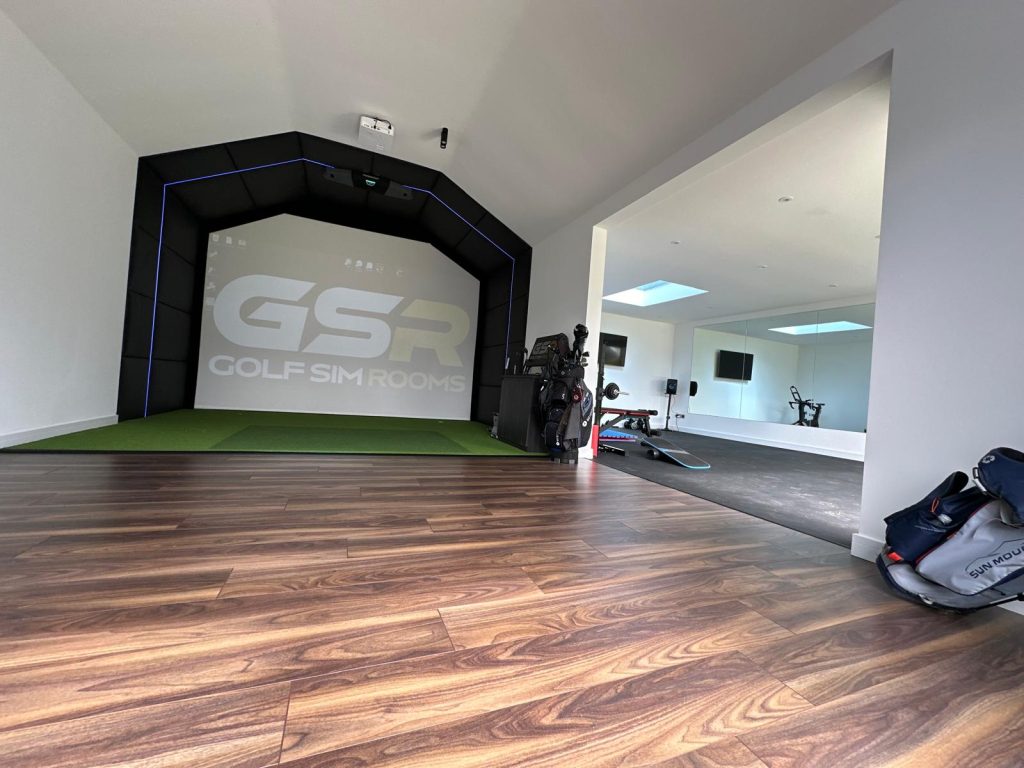
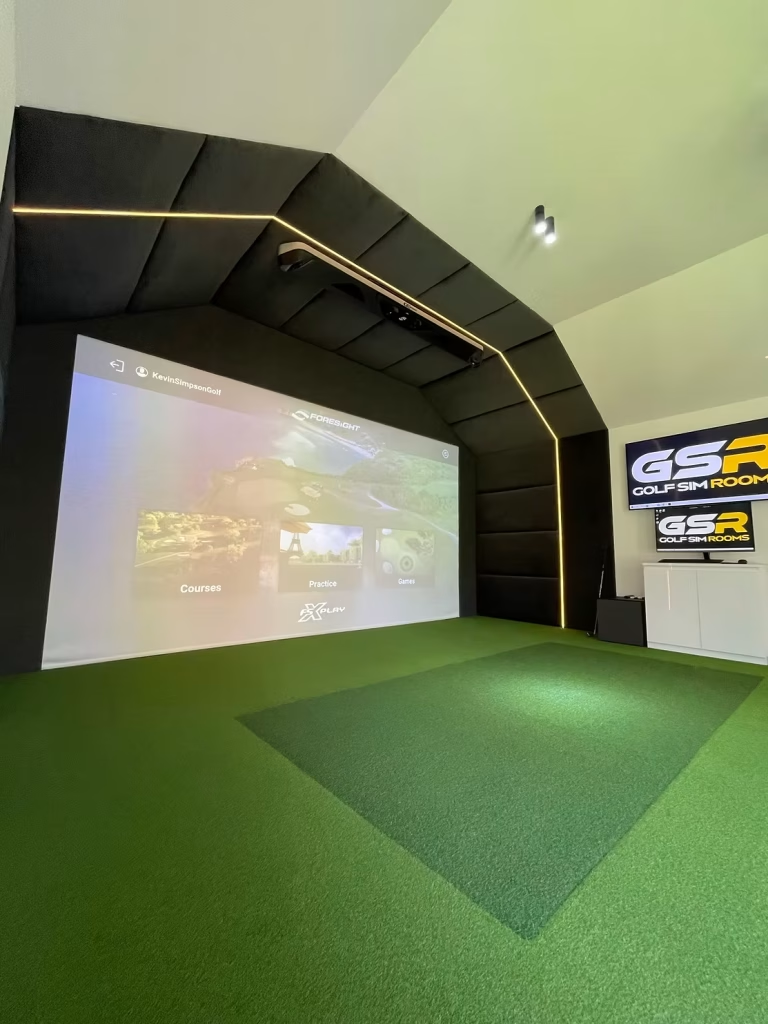
Spare bedrooms are usually the hardest to make work. The ceiling height issue rules out most modern UK bedrooms for a full swing. They can be viable for shorter club practice or for golfers who want a putting and chipping setup rather than a full simulator.
A Simple Way to Assess Your Space
Before you go any further with planning a setup, do this in the room you are considering.
Measure the ceiling height at the point where you would be standing to hit. Not in the middle of the room and not near the walls at the actual hitting position.
Then stand there and take a slow practice swing with the longest club you own, keeping your eyes on the ceiling throughout. If you are consciously abbreviating the swing to avoid hitting anything, the room is too low.
Next, measure from the back wall to where you imagine the screen sitting. Subtract 50 centimetres for the screen frame. What is left is your effective room depth. If it is under 4 metres, the setup will feel tight.
Finally, measure the width and stand in the centre of it. Swing to your left and right and check how close you get to each wall at the widest point of your swing. If you are within 60 centimetres of a wall at any point, that wall is going to affect how freely you swing.
If the room passes all three checks, it is worth talking to a specialist about what will actually fit. However, if it fails one of them, there may still be options depending on which measurement is the problem and by how much.
Conclusion
Golf simulators space comes down to three numbers: ceiling height, room depth, and width. Of the three, ceiling height is the most commonly underestimated in UK homes and the hardest to fix after the fact. If you get that right first, the rest of the planning tends to fall into place.
If you are not sure whether your space is viable, GSR offers room assessments and can advise on what would actually work in your specific dimensions. Whether that is a fit out of an existing space, a purpose-built log cabin, or a garden room designed around the setup you want. Get in touch with us today by filling out our form to start your GSR journey.