

If you are serious about getting a golf simulator at home, the room you put it in matters just as much as the equipment you install. The launch monitor, screen, and software get most of the attention, but the wrong space will limit your experience from day one regardless of how much you spend on the technology.
The good news is there are several genuinely good options for UK homeowners. The best one depends on your budget, your property, and how seriously you want to take the setup. This blog walks through each option honestly so you can make the right call for your situation.
Why the Room Type Matters More Than People Expect
Most people start their golf simulator journey by researching the technology. They spend weeks comparing launch monitors and simulator software before they have given much thought to where the setup is actually going to live.
What tends to happen in practice is that the room shapes everything. It determines which equipment will fit, how good the experience feels day to day, and whether the setup gets used regularly or sits dormant through winter because the space is too cold or too inconvenient. Getting the room right first is the smarter approach.
Log Cabin Golf Simulator Rooms
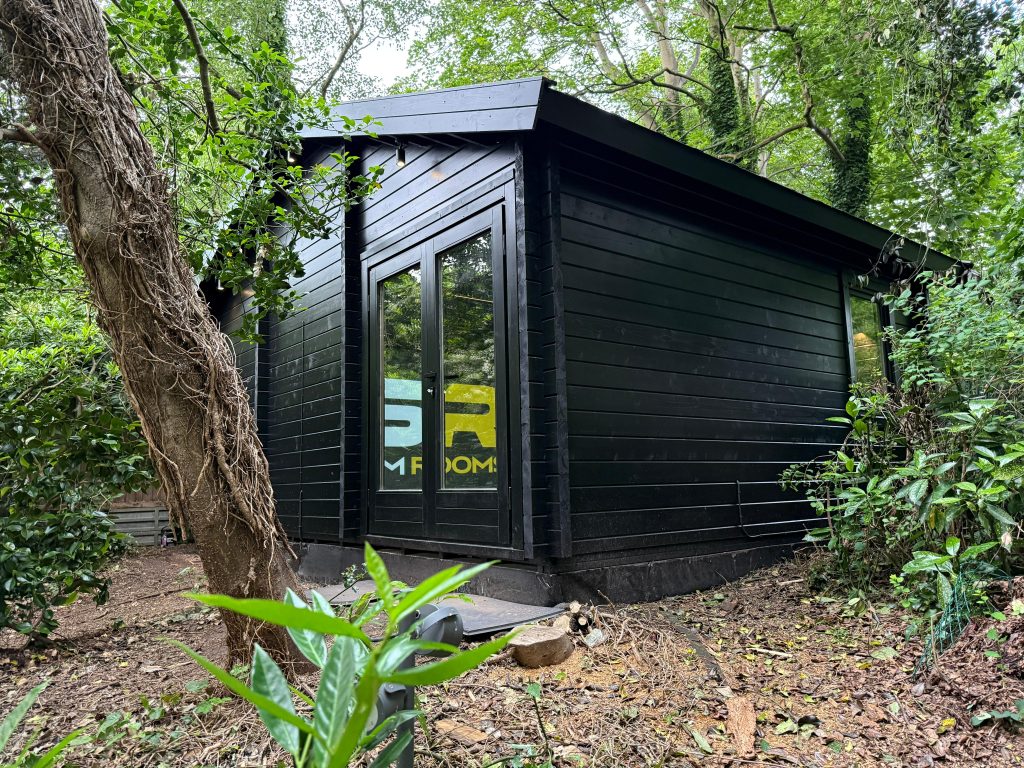
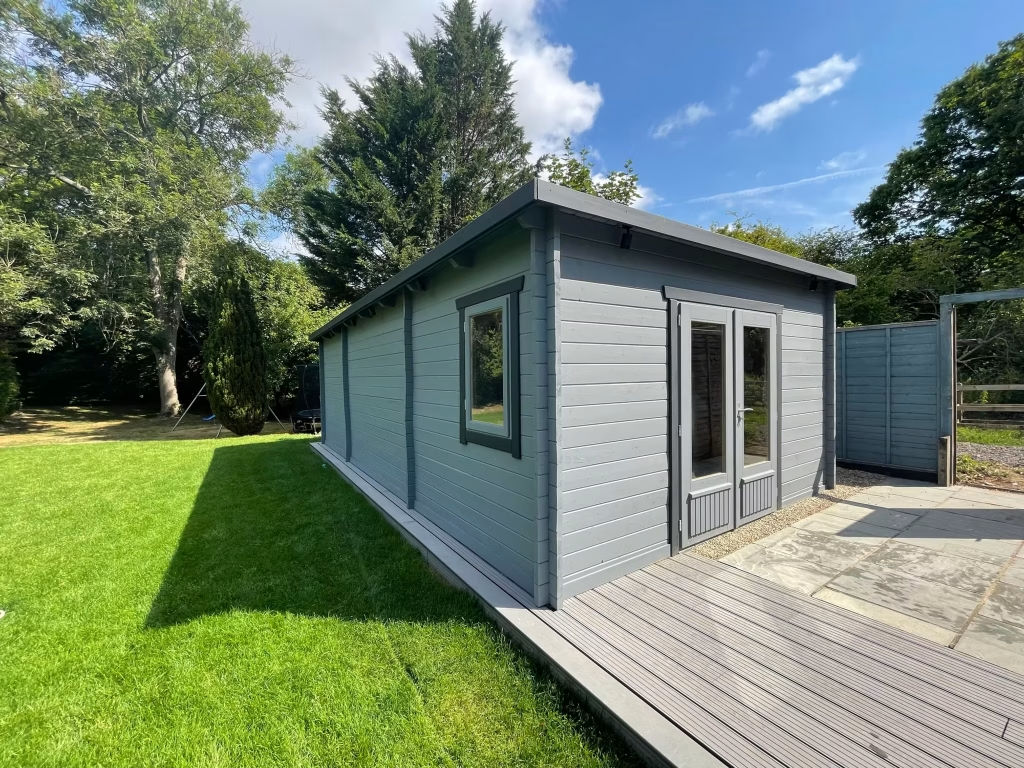
A purpose-built log cabin is one of the most popular choices for a golf simulator room in the UK, and it is easy to see why. You are adding a dedicated structure to your garden that serves one purpose and does it well.
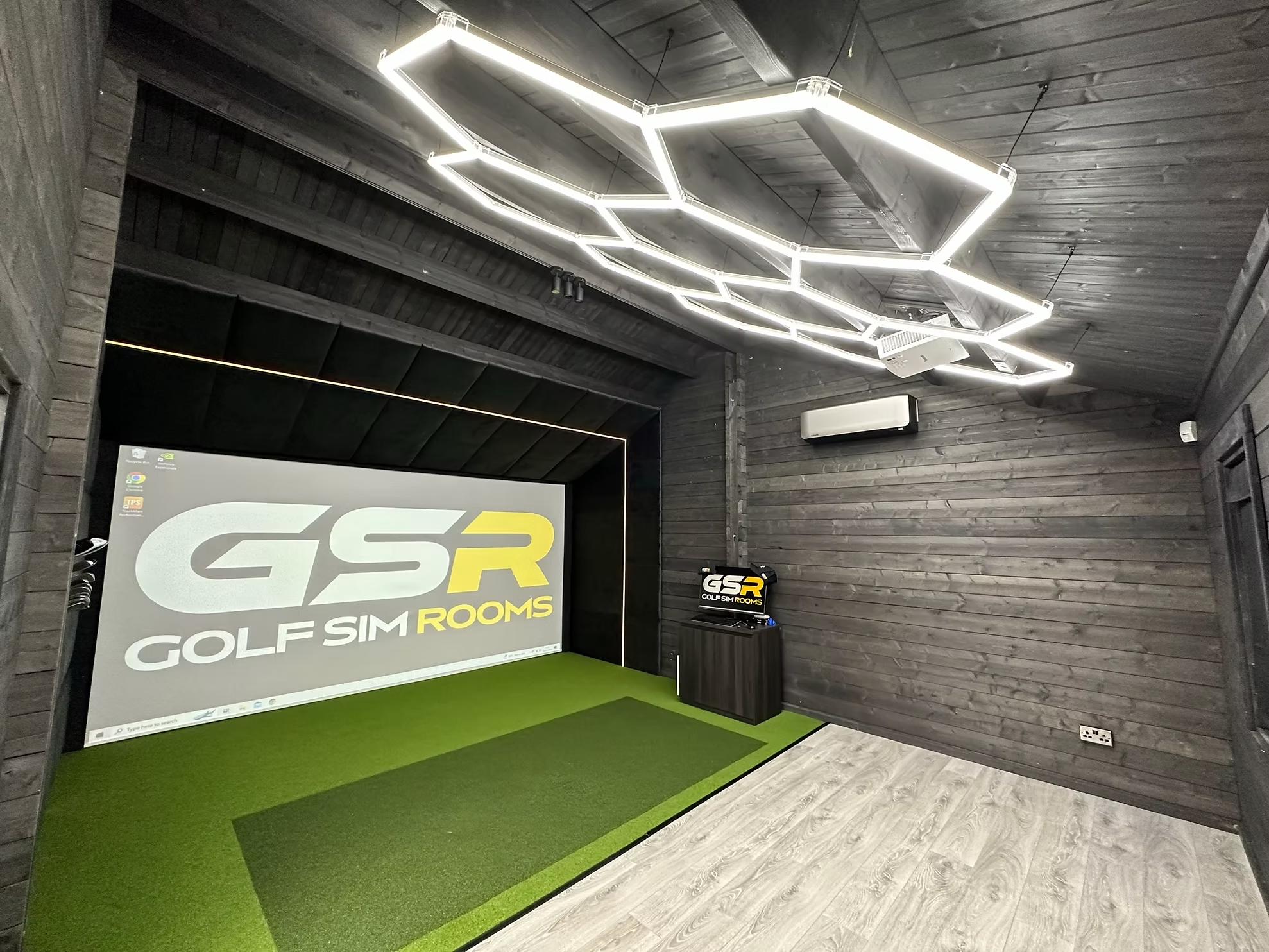
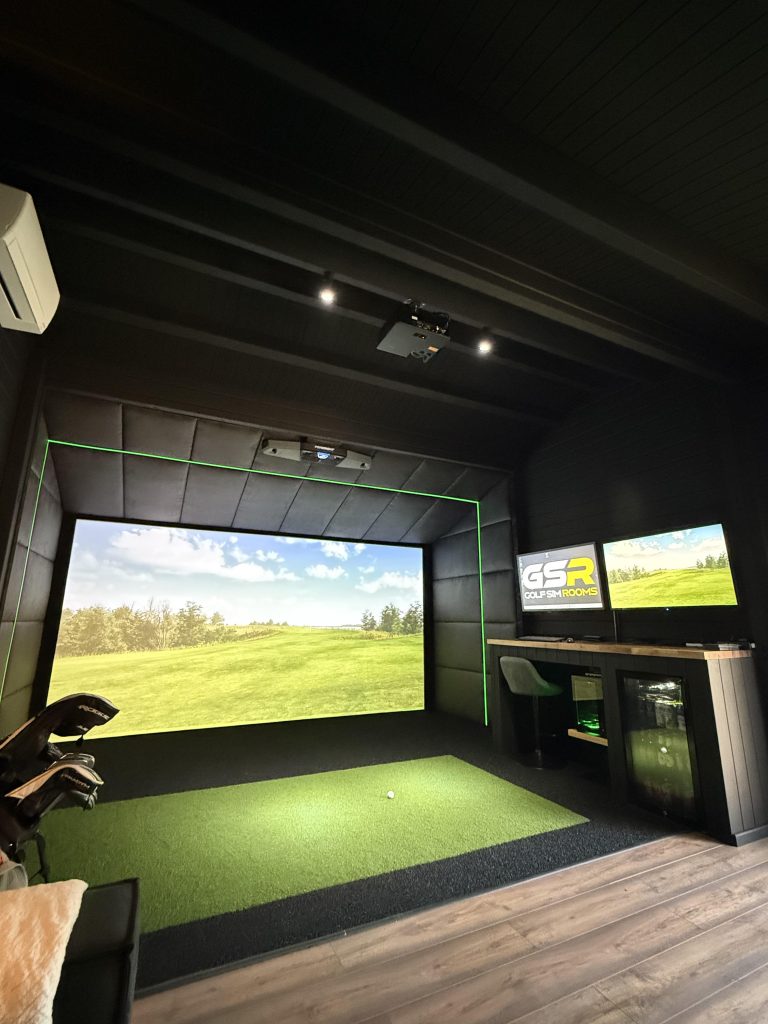
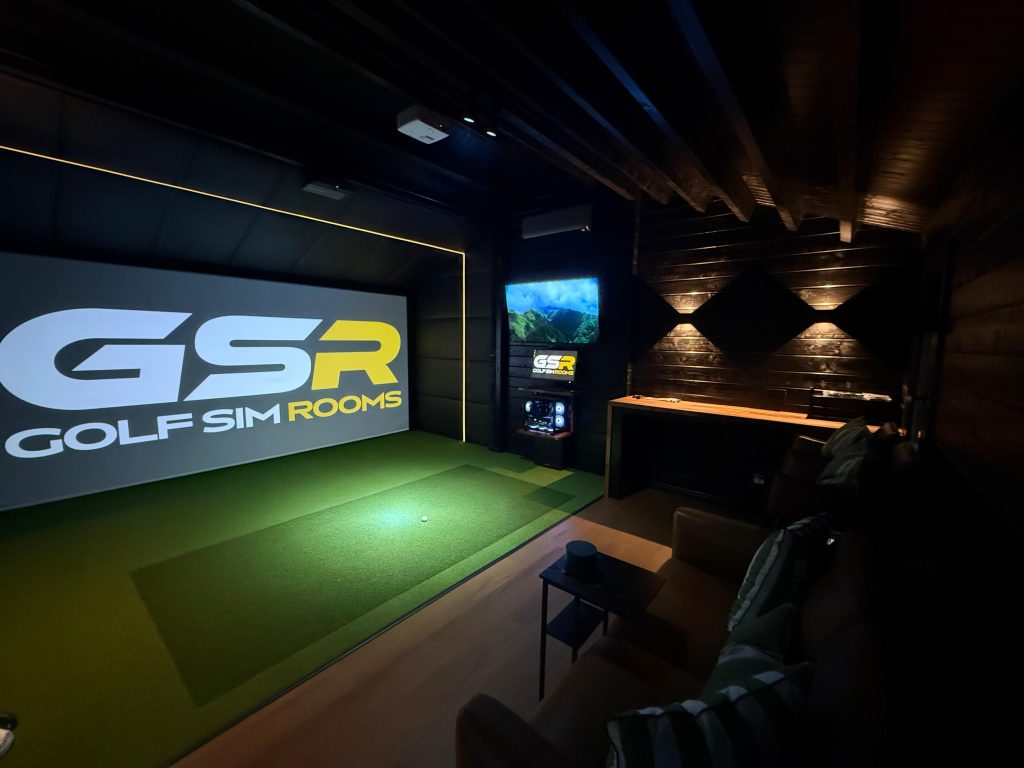
Log cabins built for golf simulators are designed with the right dimensions from the start. Ceiling height, depth, and width are all planned around the requirements of a full swing rather than retrofitted into an existing space. That makes a real difference to how the room feels when you are actually playing.
From a practical standpoint, a log cabin sits in the garden and keeps the simulator completely separate from the house. There is no noise travelling through walls, no shared space, and no compromise with how the rest of the property is used. For families, this tends to be a significant selling point.
Insulation is worth thinking about carefully. A well-insulated log cabin with proper heating stays usable through a UK winter. A poorly insulated one becomes a cold, damp space that discourages use from October through March. If you are going down this route, insulation should be a priority, not an afterthought.
Planning permission is not usually required for a garden cabin used as a leisure space, but it is always worth checking with your local authority before committing, particularly if the structure is large or close to a boundary
Golf Simulator Fit Outs in Existing Spaces
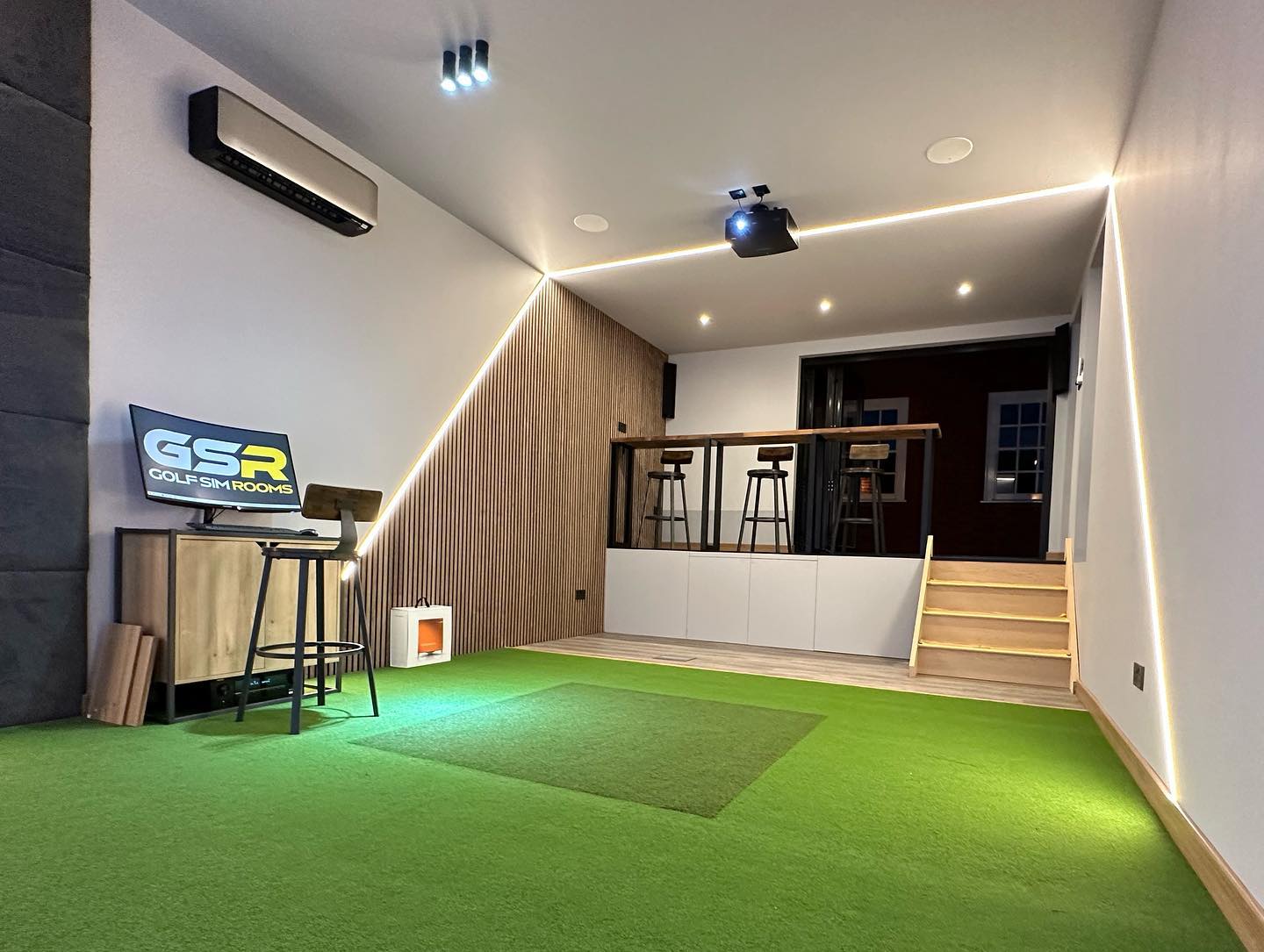
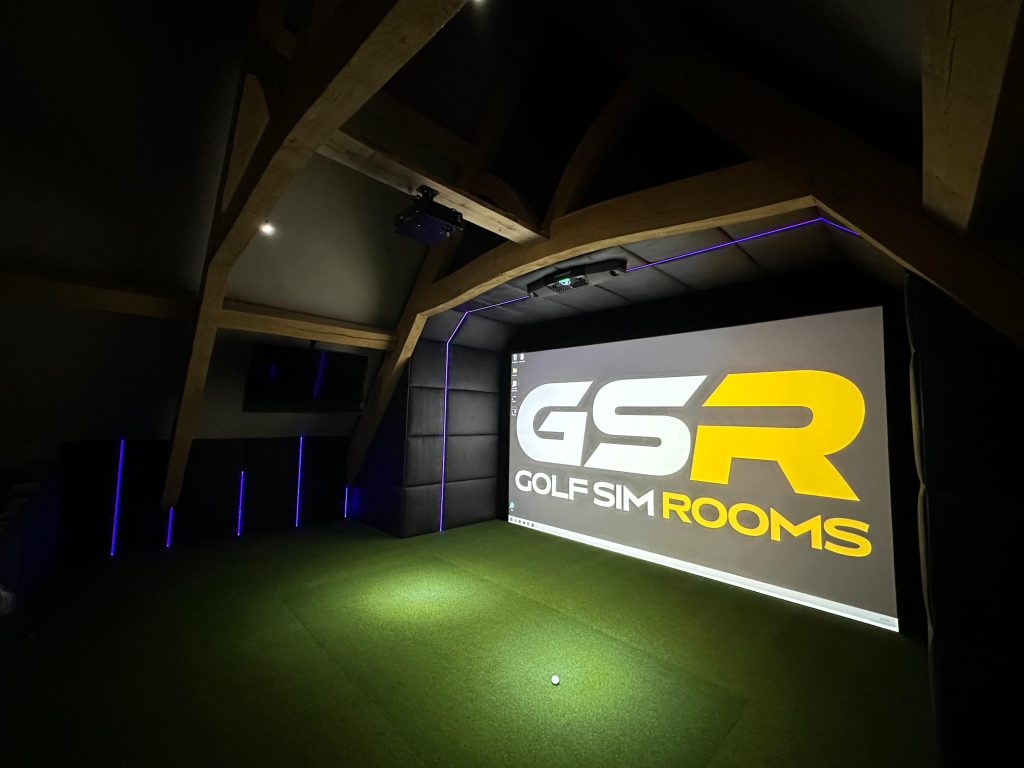
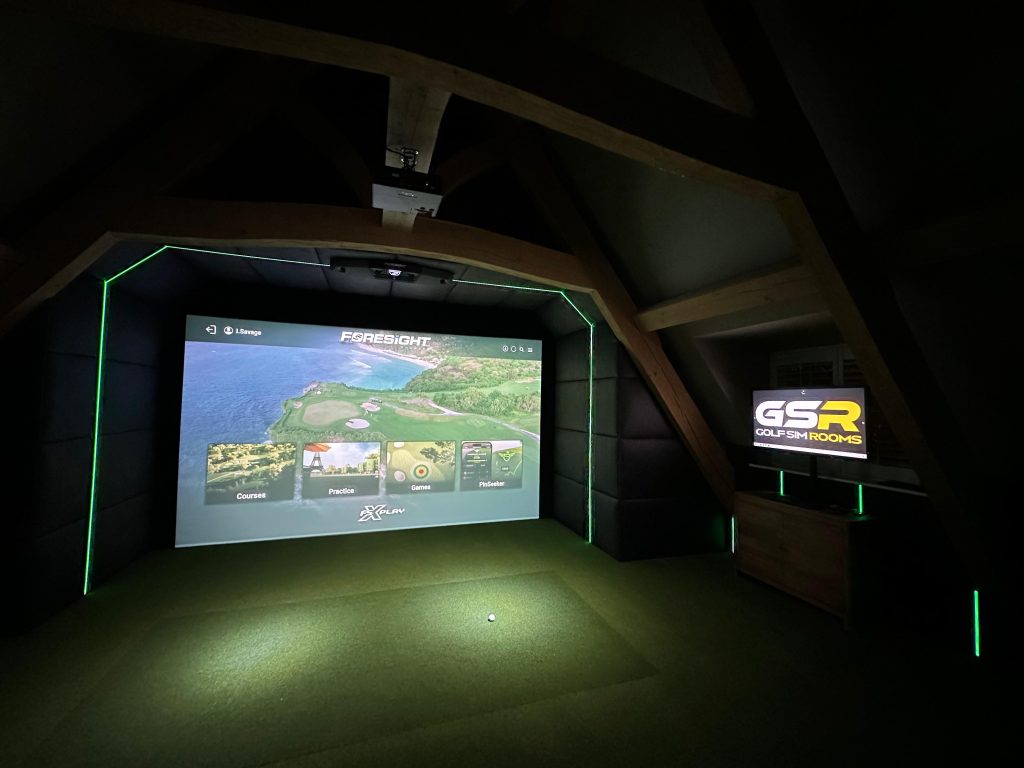
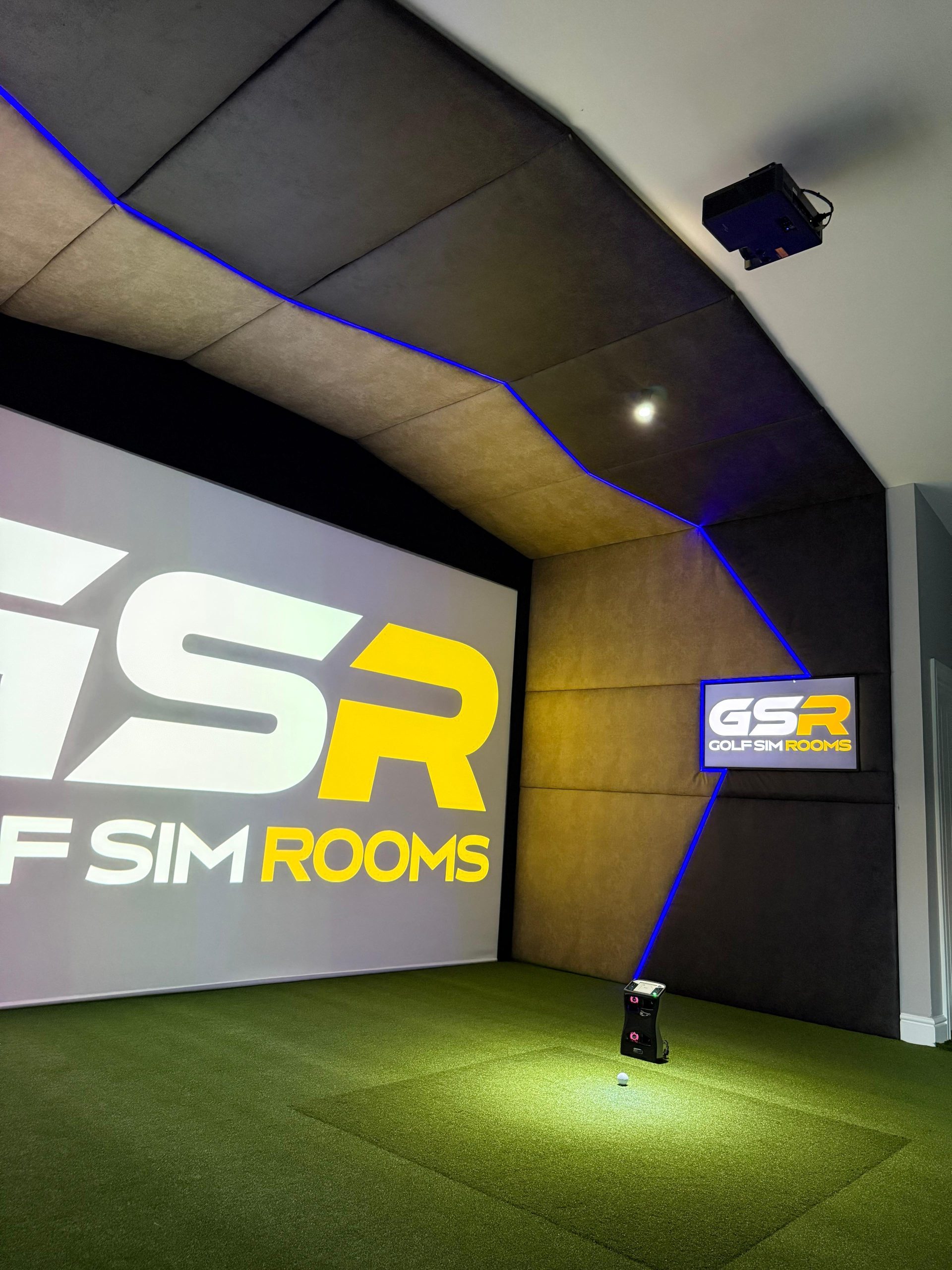
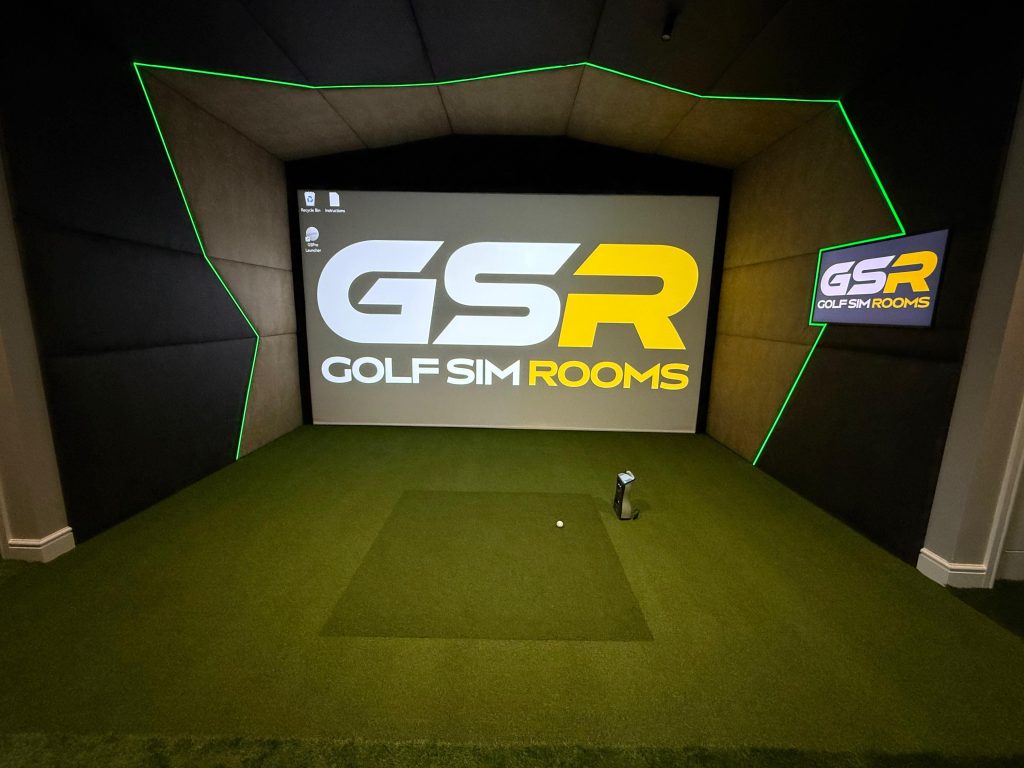
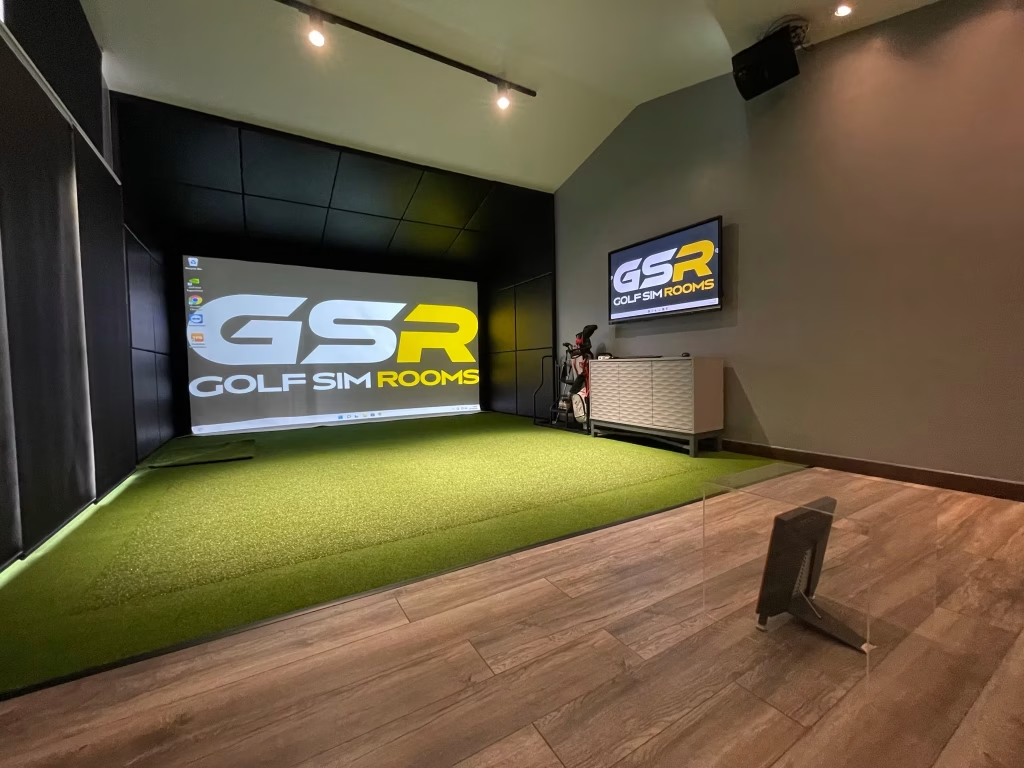
A fit out involves converting a space you already have into a dedicated golf simulator room. The most common candidates are garages, but spare rooms and basements can work depending on the dimensions.
This is often the most cost-effective route because you are not building a new structure. The money goes into the fit out itself rather than the build, which means more of the budget can go toward better equipment.
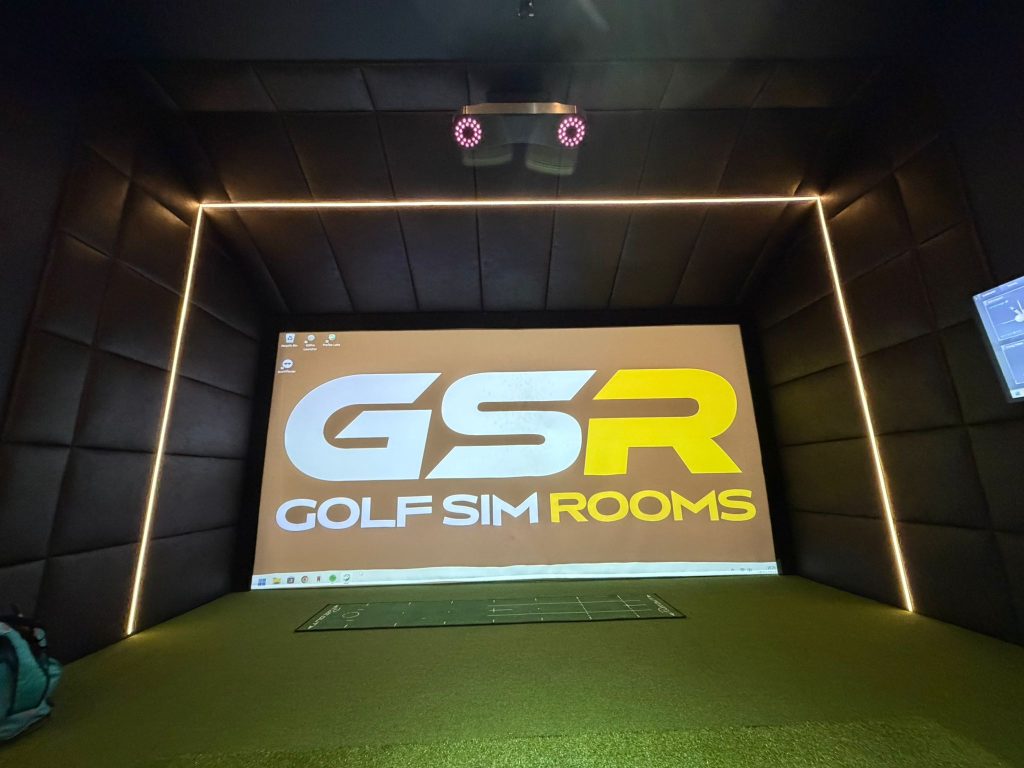
The quality of a fit out varies enormously depending on who does it. A well-executed fit out includes proper acoustic treatment, good lighting that does not cause glare on the screen, a quality hitting mat, and tidy cable management. A poor one throws the screen up on a wall and calls it done. The difference in playing experience is significant.
Garages are the most practical starting point for most UK homeowners. A double garage typically has enough width and depth for a comfortable setup. The ceiling height is the most common issue, as standard garage heights can be tight for a full driver swing. Single garages can work for shorter clubs and partial setups, but they are limiting if you want to use every club in the bag.
The key advantage of a fit out is that you are using space that already exists. For homeowners who have a garage that is not being used as a garage, converting it into a golf simulator room is one of the better uses of that space.
Garden Rooms
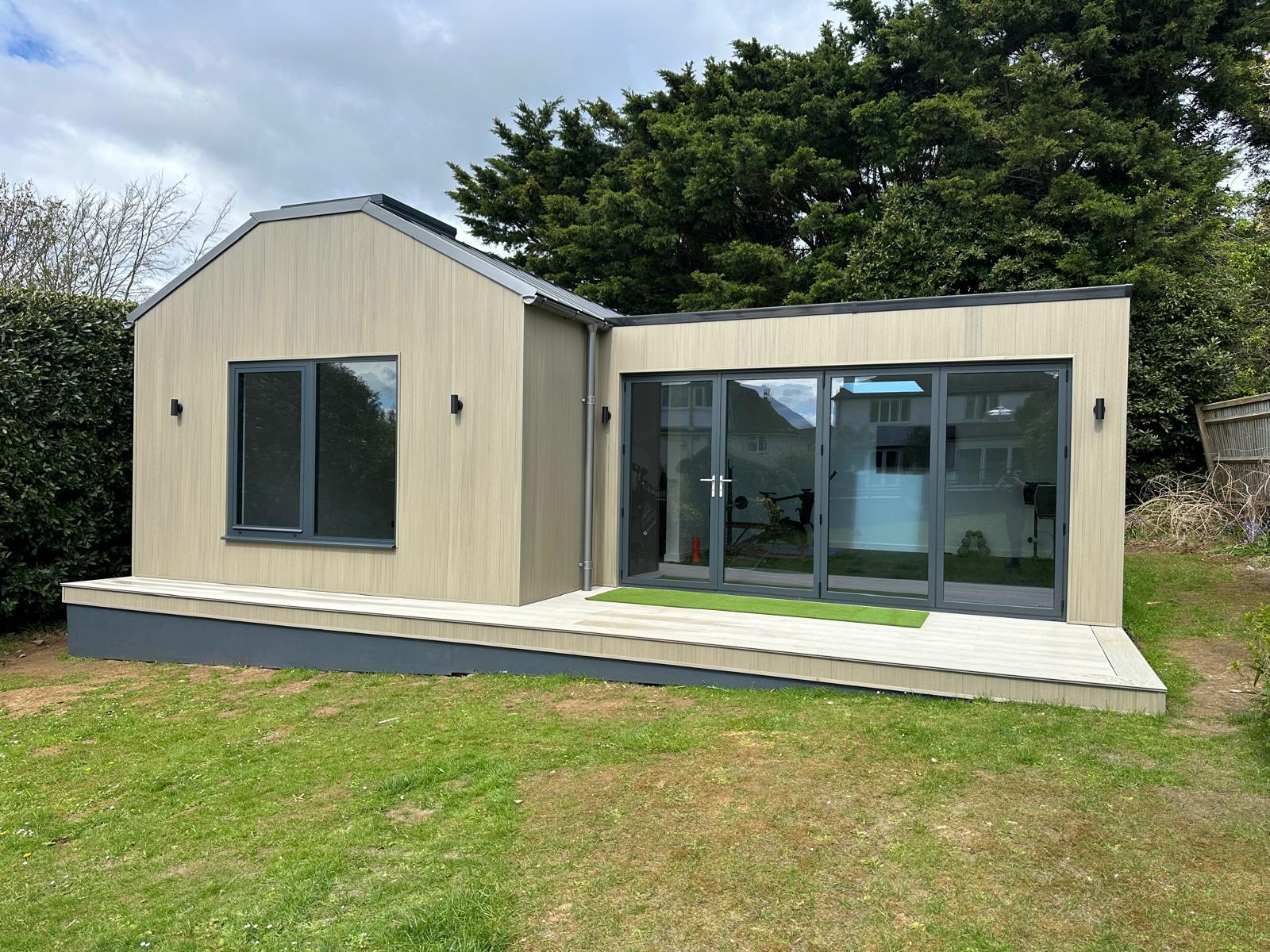
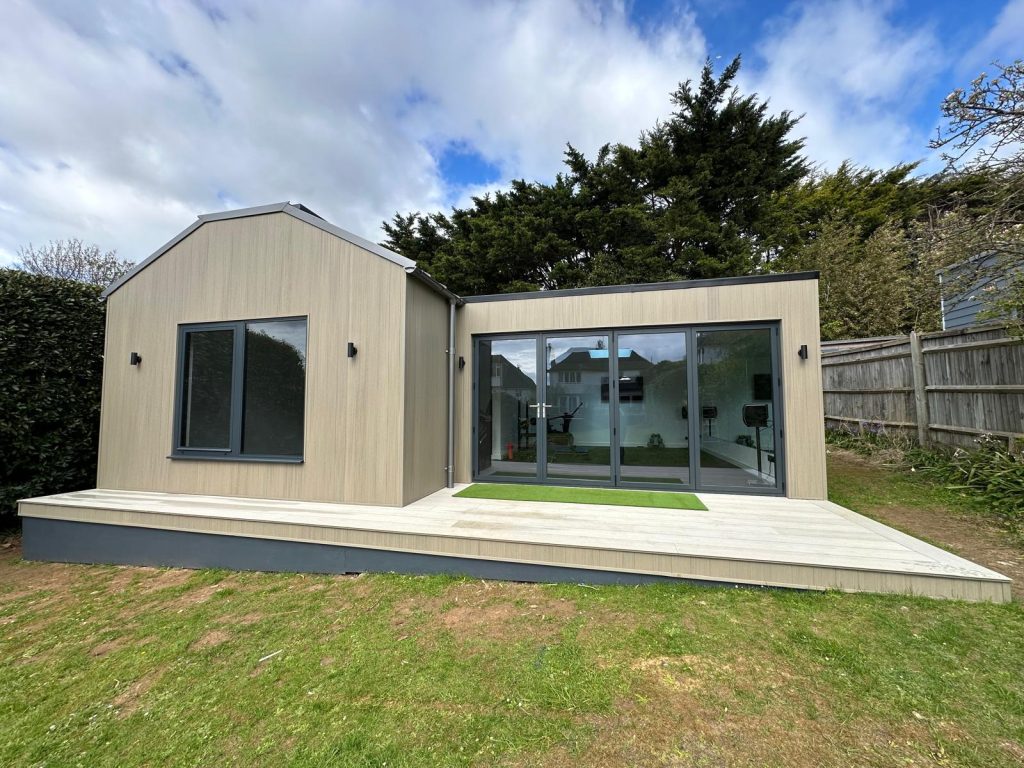
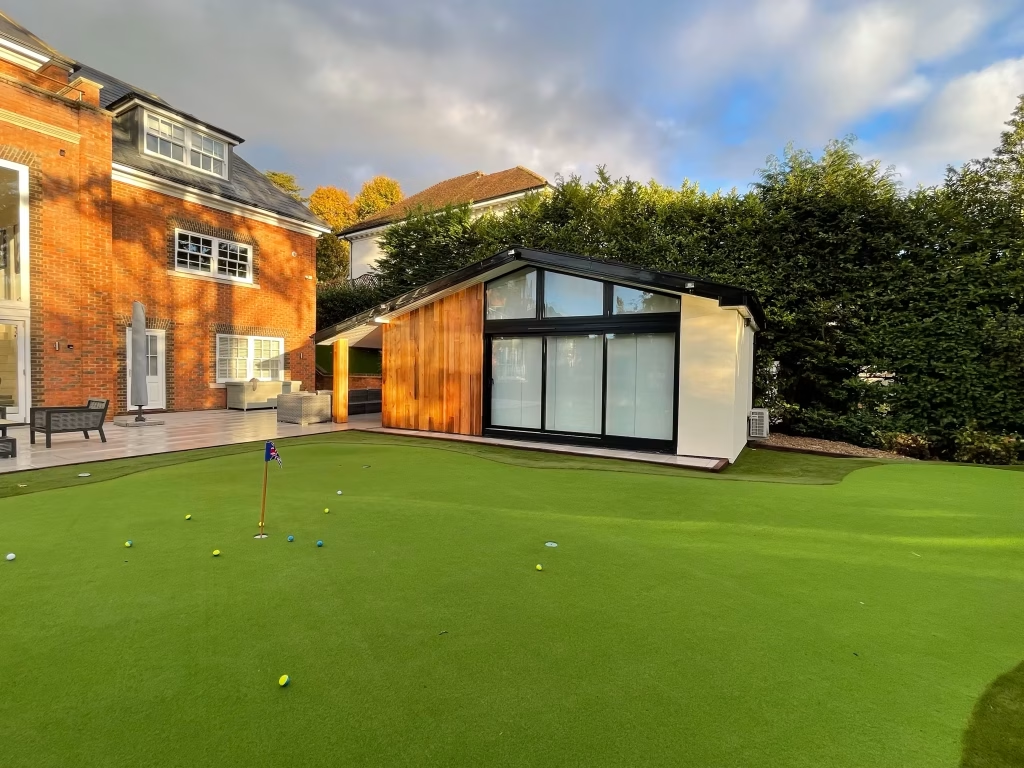
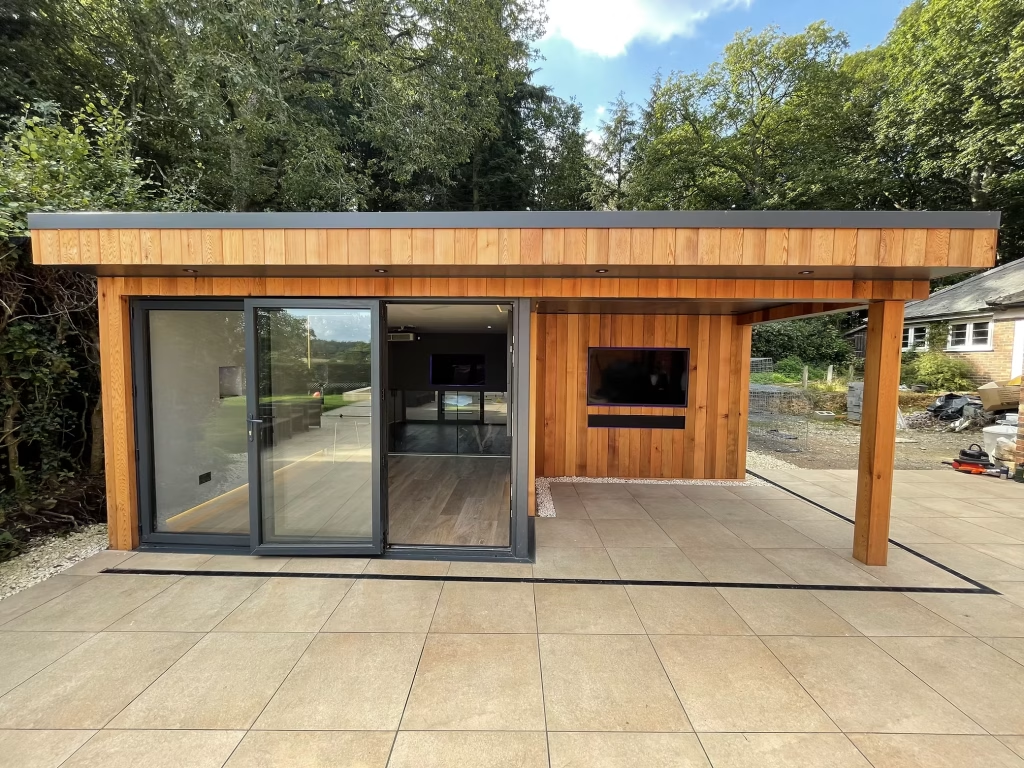
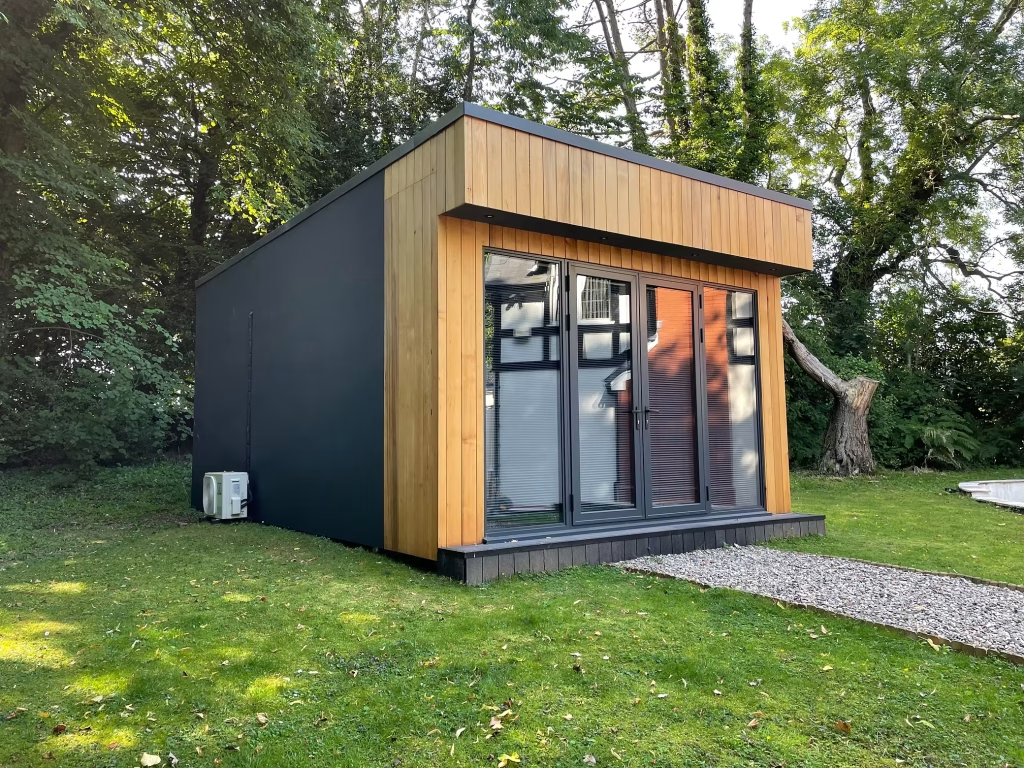
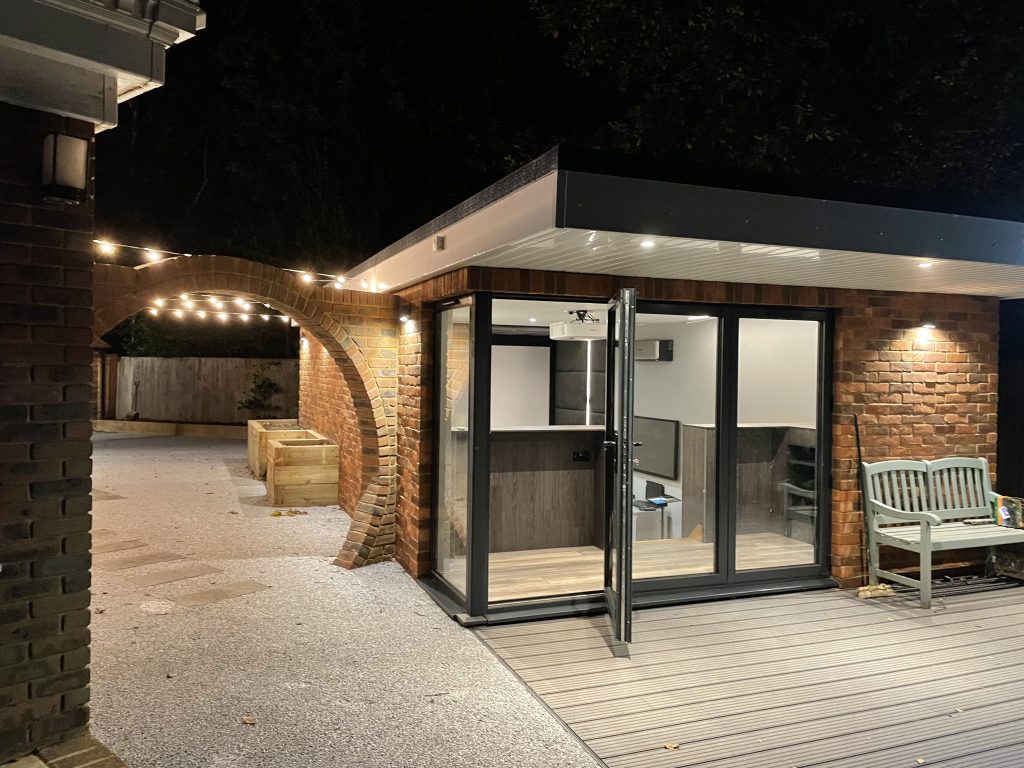
A garden room sits somewhere between a log cabin and a full extension. These are typically higher-specification structures than a standard log cabin, with better insulation, electrics, and finish as standard.
For a golf simulator, a garden room built to the right dimensions can be an excellent long-term solution. The build quality tends to be higher, and a well-designed garden room adds genuine value to the property in a way that a garage conversion does not always do.
The cost is higher than a log cabin, but for homeowners who want a space that works as both a golf simulator room and a usable room in its own right, it is worth considering. Some customers use the room for other purposes when they are not playing, which helps justify the investment.
The same planning considerations apply as with a log cabin. Most garden structures under a certain size fall under permitted development, but this depends on the specifics of your plot and local restrictions.
Spare Room Conversions
Converting a spare bedroom into a golf simulator room is possible, but it comes with the most constraints of any option on this list.
Ceiling height is the main problem. Standard UK ceiling heights sit around 2.4 metres, which is wnot enough for a comfortable full swing with longer clubs. Some older properties and loft conversions with high ridge lines can work, but they are the exception rather than the rule.
If the ceiling height is there, a spare room conversion can work well. The space is already insulated and heated, which is a practical advantage over a garage or outbuilding. The trade-off is that you are giving up a bedroom, which is a real consideration for most households.
In practice, spare room setups tend to work best for golfers who want to practice with irons and shorter clubs rather than hit full drivers. If that matches how you intend to use the simulator, it is a viable option. If you want to swing freely with every club, you will likely find the space frustrating.
How to Choose the Right Option
There is no single best type of golf simulator room. The right answer depends on a few straightforward questions.
What space do you already have? If you have a double garage sitting unused, a fit out is likely the most practical and cost-effective route. If your garden has room for a structure, a log cabin or garden room gives you a dedicated space without affecting the rest of the house.
How serious is the setup? For someone who wants to practice regularly and play full rounds on the simulator, a purpose-built space is worth the investment. For someone who wants an occasional practice setup, a well-converted spare room or garage might be entirely sufficient.
What is the budget? Fit outs in existing spaces are generally the most affordable route. Log cabins sit in the middle of the range. Garden rooms at the higher end of quality can be a significant investment, though the build quality and longevity reflects that.
What matters to the rest of the household? A simulator in a garage or outbuilding keeps noise and disruption away from the living space. A spare room conversion does not. That might seem like a small point, but it affects how freely the room gets used day to day.
The Room That Gets Used Is the Best Room
The most expensive setup in a poorly planned space will get used less than a mid-range setup in a room that is properly done. Ceiling height, temperature, lighting, and convenience all affect whether you actually walk in there after work and hit balls. Whatever option you choose, plan the space before you plan the equipment. The technology is the easier problem to solve.
Conclusion
If you are weighing up the options for your property and want to talk through what would actually work in your space, Golf Sim Rooms specialises in log cabin builds, full room fit outs, and garden room installations across the UK. It is worth a conversation before you commit to anything. We do also offer golf sim room installations worldwide. Yes. Worldwide. Use our international contact form if you are outside of the UK.